
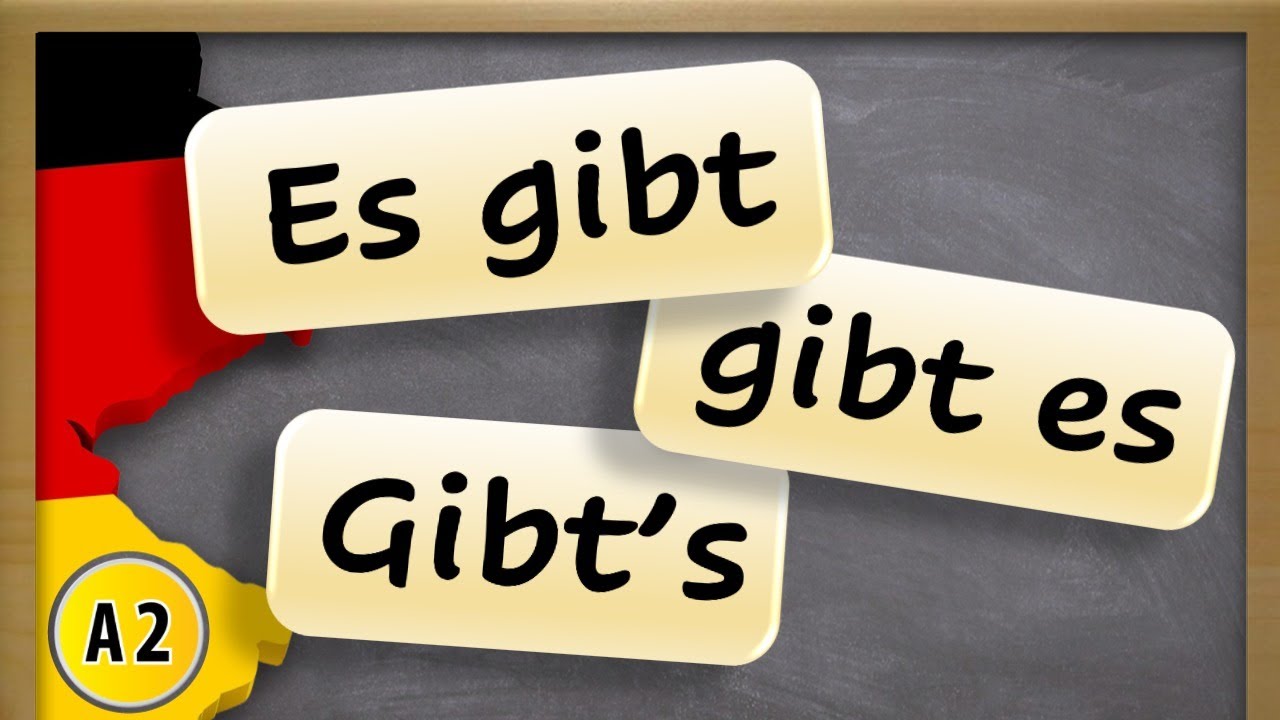
How to use "ES GIBT" in German and how to translate it
"Es gibt" is one of the first fixed expressions German learners meet, but it trips people up because it doesn't translate word-for-word into "there is/there are." The literal meaning is closer to "it gives," and understanding that origin actually makes the grammar around it much easier — including why it's always followed by the accusative case. This lesson covers exactly how "es gibt" works and how to use it correctly in statements and questions.
What "Es Gibt" Actually Means
Es gibt comes from the verb geben (to give), conjugated in the third person singular: es gibt literally means "it gives." In practice, it's used to express that something exists, similar to "there is/there are" in English — but unlike English, German uses the same singular form ("es gibt") no matter how many things you're talking about: Es gibt einen Park in der Nähe. — There's a park nearby. Es gibt viele Parks in der Stadt. — There are many parks in the city.
"Es Gibt" Always Takes the Accusative Case
Because "es gibt" is built on the verb "geben," which needs a direct object, whatever comes after "es gibt" is always in the accusative case: Es gibt einen Fehler. — There is a mistake. (der Fehler → einen Fehler). This holds true regardless of whether you're talking about one thing or several.
"Es Gibt" vs. Location Words Like "Da" or "Hier"
"Es gibt" refers purely to existence, not to a specific location — it tells you that something exists somewhere, but not exactly where. To point to a specific spot, German uses other structures, e.g. "Der Park ist da drüben" (The park is over there), rather than "es gibt." Keeping this distinction in mind helps avoid overusing "es gibt" in places where a more specific location word fits better.
Frequently Asked Questions
What does "es gibt" literally mean in German?
"Es gibt" literally means "it gives," from the verb "geben" (to give), and is used to express that something exists, similar to "there is/there are" in English.
Does "es gibt" change for plural nouns?
No — unlike English, which switches between "there is" and "there are," German always uses the singular "es gibt" regardless of how many things follow it.
What case does "es gibt" require?
"Es gibt" always takes the accusative case, since it's built on the verb "geben," which requires a direct object, e.g. "Es gibt einen Fehler" (der Fehler → einen Fehler).
How do you ask a question using "es gibt"?
You invert the word order to "Gibt es...?", e.g. "Gibt es hier einen Supermarkt?" — Is there a supermarket here?
Is "es gibt" used to say exactly where something is?
No — "es gibt" only expresses that something exists, not its specific location. For pinpointing a location, German uses other words like "da" or "hier" instead.
Fixed expressions like this one are exactly what get built into real conversation practice in our A2 German course.
