Ausgeben, verbringen, or verschwenden — which one do you use when you want to say "to spend" in German? 🤔 In this video lesson, we break down three German verbs that get mixed up constantly. Ausgeben and verbringen both translate to "to spend" in English, but they are NOT interchangeable in German...
"I feel cold" is not Ich fühle kalt, and "I am bored" is not Ich bin langweilig. The correct sentences are Mir ist (es) kalt, Mir ist (es) langweilig and Mir ist (es) schlecht. This lesson explains the grammar behind Mir ist ..., shows how the wrong case changes the meaning, and lists the six adje...
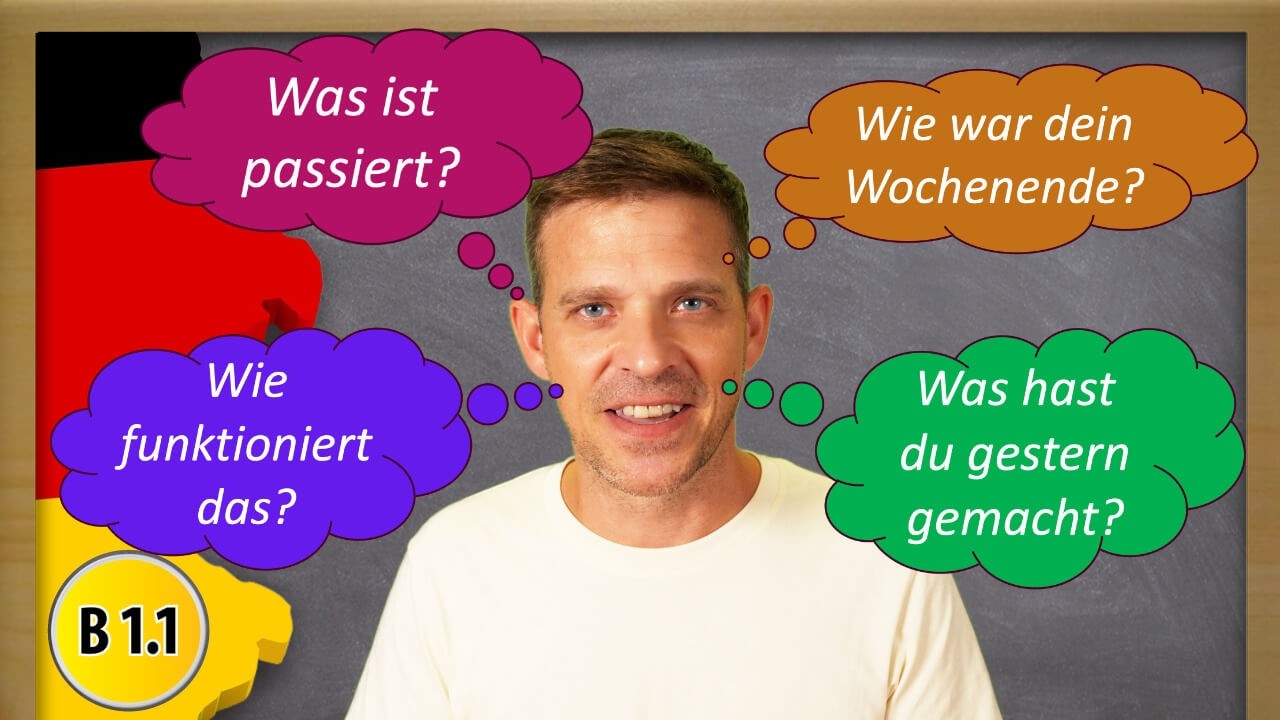
To answer questions like Wie war dein Wochenende? or Was ist passiert? you need words that put events in order. German calls these Abläufe (procedures) and Reihenfolgen (sequences). This lesson gives you the words for the beginning, the middle and the end of a story, shows them in a short story ab...
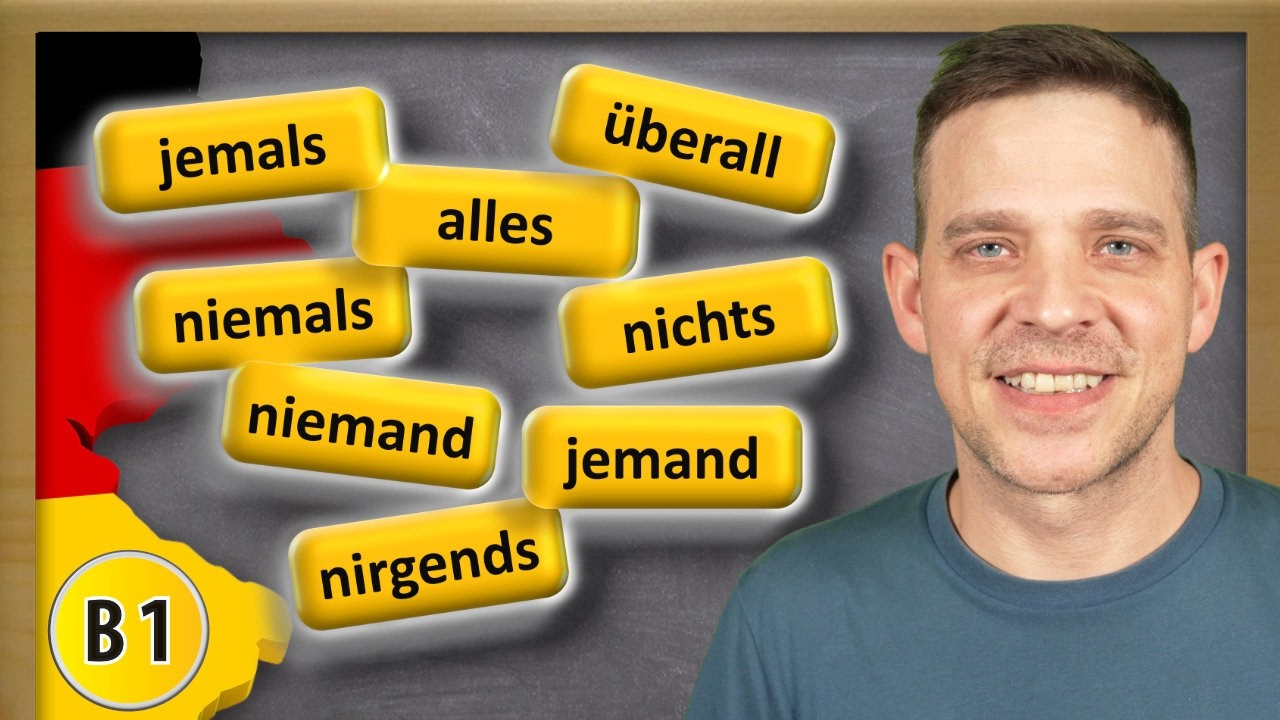
Do you know the difference between nie and niemals, or between jemand and niemand? In this lesson you learn eight German indefinite words in four useful pairs: alles and nichts, jemals and nie, überall and nirgends, jemand and niemand. They are opposites, which makes them easy to remember.
1. alle...
A video about und? How boring! No, ganz und gar nicht. That answer is already one of 10 useful German expressions with und that you can use in daily life. For each expression this lesson gives you the meaning and two short dialogues between person A and person B, so you can see in which situation ...

Only about 14 percent of the German verbs from A1 to B1 use sein as the auxiliary verb in the Perfekt, and 20 of them are enough to cover the vast majority. According to the official Goethe vocabulary list, there are 690 verbs from A1 to B1 including verbs with prefixes. 86 percent of them use hab...
Das macht mir Spaß, but das macht mich müde: why mir in one sentence and mich in the other? The answer is simple. After the verb machen, a noun goes with mir (Dativ), and an adjective goes with mich (Akkusativ). In this lesson you learn the rule and the most common phrases with each pronoun, which...

These are the 20 most common German verbs that can be used with zu and an infinitive. In this lesson, Luzi from YourGermanTeacher goes through them alphabetically, with example sentences and a bonus tip about the special verb brauchen. There are a few more verbs, but these are the ones you can use...

Das Märchen von Nian: the Chinese New Year legend, told entirely in German. This short story explains where the customs of the Chinese New Year come from, and it is a perfect listening exercise for B1 learners. The whole story is spoken in German, and English subtitles are available in the video.
...