
Every kingdom has a king, a queen, knights, advisors — and a magician. In this lesson, we use the "German Sentence Structure Kingdom" to make word order finally click: who the characters are, why the magician (a personal pronoun) outranks almost everyone, and the three practical rules that work fa...
Der laufende Mann, das geöffnete Fenster: do you know how these adjectives are made? In German you can turn verbs into adjectives with the Partizip 1 and the Partizip 2. This lesson shows you how to form both, how to add the adjective endings, what to do with two adjectives and when a relative cla...
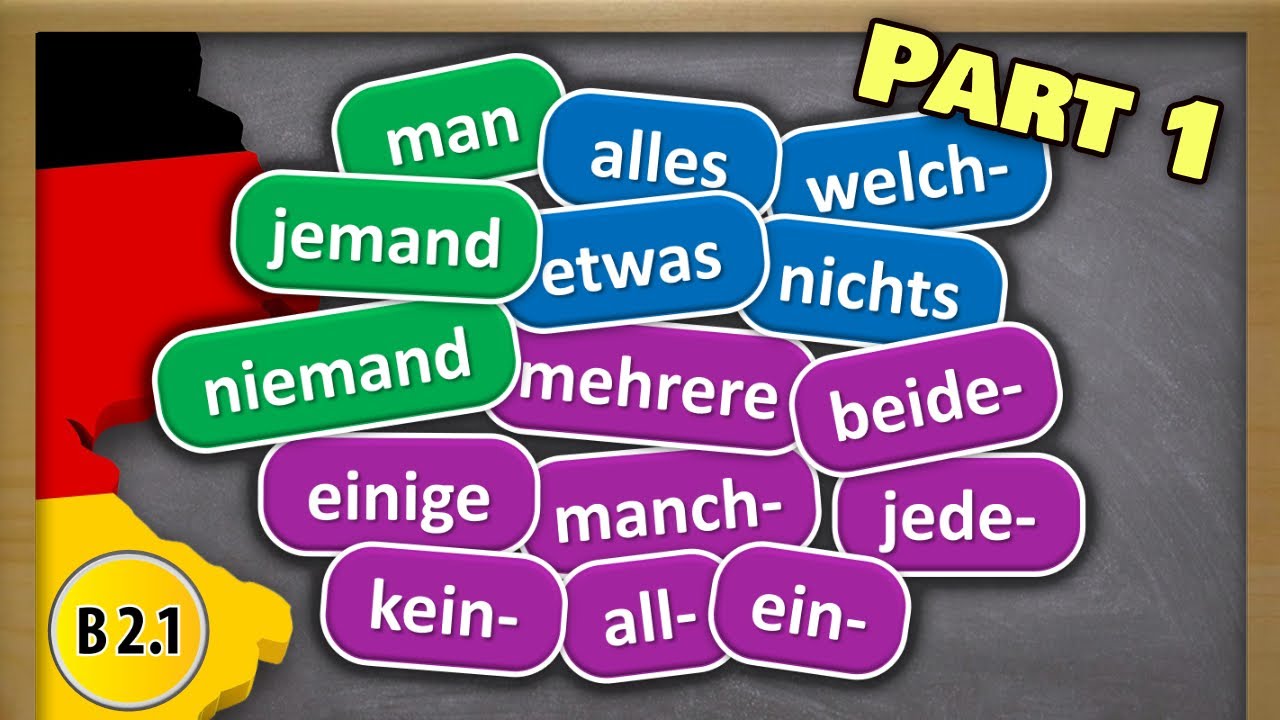
German indefinite pronouns (Indefinitpronomen) refer to people or things in a general, unspecified way. This is part 1 of a three-part series. It covers the three pronouns used only for people (man, jemand, niemand) and the four used only for things (alles, etwas, nichts, welch-). It is a B2 topic...
Want to say what something is for or what you are trying to achieve? German gives you three options: damit, um ... zu and zum + Infinitiv. Once you know when to use which one — and what rules each of them follows — you can go far beyond "weil" and express purposes and goals the way native speakers...
German relative clauses can be tough — but "was" and "wo" are the two relative pronouns that let you skip prepositions, cases and articles. In this lesson you will learn when and how to use "was" and "wo" correctly, which rules apply to each, and how they can make your German both simpler and more...
Look at this sentence: Meiner Meinung nach sind die Gäste nach und nach nach Hause gegangen. It contains four times the word nach, and each one does a different job. In German nach can be a preposition (for time, for place and for how), a verb prefix and an adverb. This lesson unpacks all of them,...
Many German textbooks and websites mix up possessive articles and possessive pronouns — but knowing the difference between "mein" and "meiner" or "meins" really does help you speak more naturally. This lesson shows what makes them different, when to use each one, and easy ways to remember the endi...
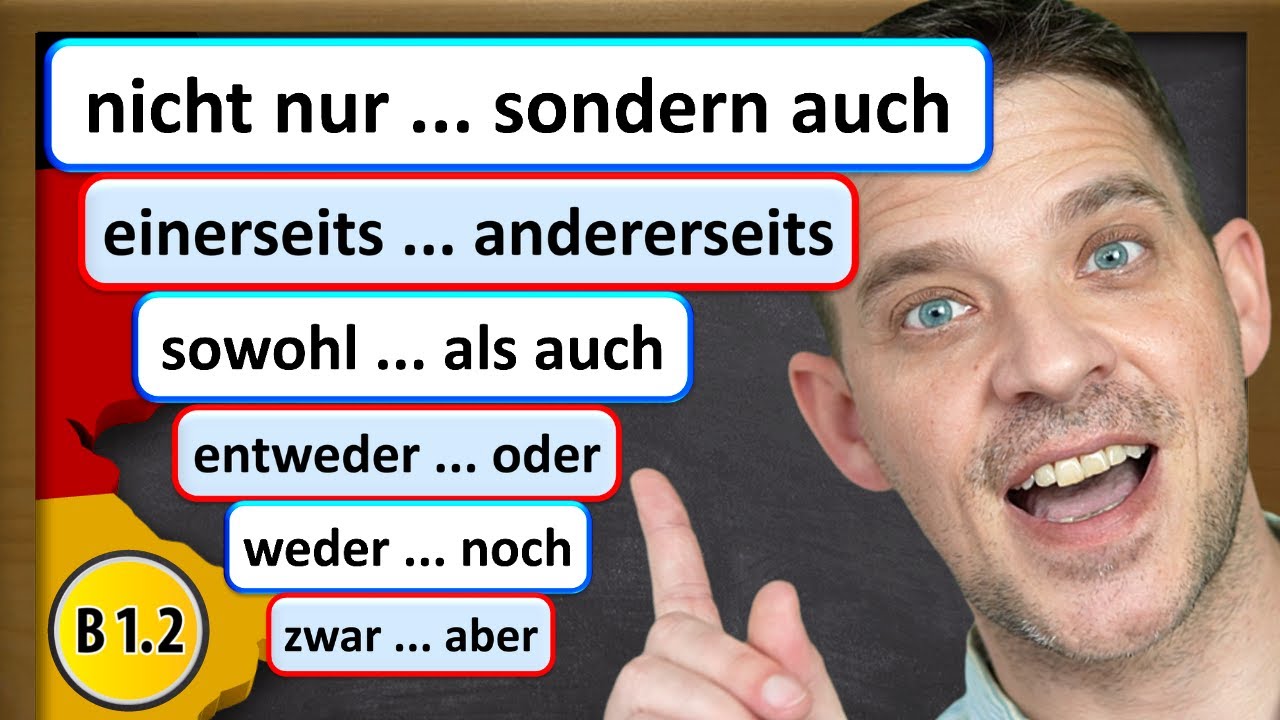
Je mehr du Deutsch sprichst, desto besser wirst du. This sentence uses a Doppelkonjunktion, a two-part connector. In this lesson, Luzi from YourGermanTeacher explains the seven most important German two-part connectors: when to use them, where the subject and the verb go, and which ones need a com...
To talk about the past in the passive, German uses two forms: the Passiv Präteritum and the Passiv Perfekt. Both are an important part of B1.2 grammar, and you will meet them in spoken and in written German. This lesson shows you how to build each form, how they differ from the passive in the pres...