
How to express feelings in German | Mir ist... 😎
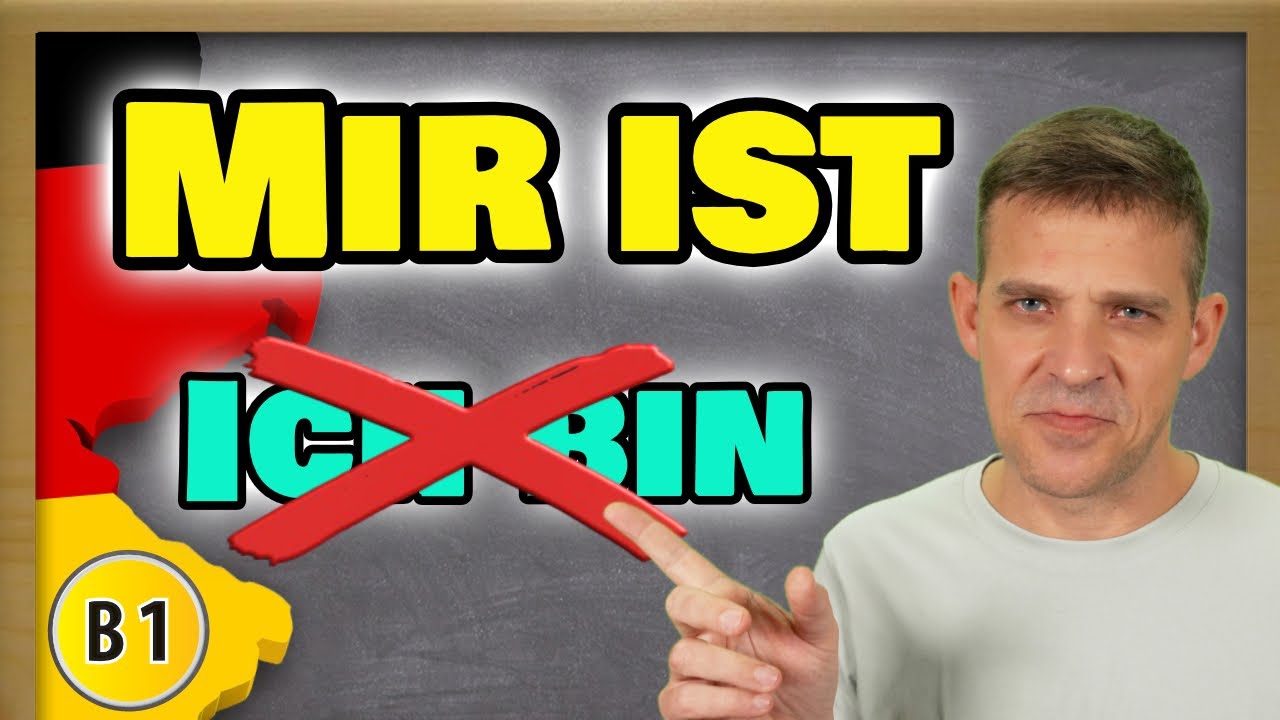
"I feel cold" is not Ich fühle kalt, and "I am bored" is not Ich bin langweilig. The correct sentences are Mir ist (es) kalt, Mir ist (es) langweilig and Mir ist (es) schlecht. This lesson explains the grammar behind Mir ist ..., shows how the wrong case changes the meaning, and lists the six adjectives the rule applies to.
Mir ist kalt: The Grammar
- es is the subject, in the nominative. You can drop it: Mir ist kalt and Mir ist es kalt mean exactly the same.
- mir is a personal pronoun in the dative. The person is the dative object, the receiver of the feeling.
- Literally, German says "it is cold for me". That is why English speakers often get it wrong: English starts with "I".
More examples:
- Meinen Eltern ist (es) heiß. My parents are feeling hot.
- Den Kindern ist (es) schlecht. The children feel sick.
- Meinem Bruder ist (es) langweilig. My brother is bored.
Two things to watch:
- Dative plural nouns get an extra -n: ein Kind, zwei Kinder, but den Kindern.
- The verb follows the subject es, so it is always ist, even if the people are plural.
- You could also say Es ist meinem Bruder langweilig, but starting with the dative object is more common.
Bored or Boring? The Case Changes the Meaning
If the person becomes the subject in the nominative, the meaning changes completely.
| Dative (how the person feels) | Nominative (what the person is like) |
|---|---|
| Meinem Bruder ist langweilig. My brother is bored. | Mein Bruder ist langweilig. My brother is boring. |
The -m in meinem is always a sign of the dative. Always check the subject, because the subject is the main actor in the sentence.
The Six Adjectives
The rule only applies to a handful of adjectives. These six are the important ones:
| Adjective | Meaning with Mir ist ... |
|---|---|
| warm | I feel warm |
| heiß | I feel hot |
| kalt | I feel cold |
| langweilig | I am bored |
| gut | I feel well |
| schlecht | I feel sick |
Example Sentences
- Mir ist ein bisschen zu warm. Kannst du bitte das Fenster öffnen? I feel a bit too warm. Can you please open the window?
- Ist es euch zu heiß hier? Ich kann die Klimaanlage anmachen. Is it too hot for you guys in here? I can turn on the air conditioning.
- Meinem Opa ist kalt. Hast du eine warme Jacke für ihn? My grandpa feels cold. Do you have a warm jacket for him?
- Ist dir auch langweilig? Lass uns nach Hause gehen. Are you bored too? Let's go home.
- Ist Ihnen schlecht? Are you feeling sick? (formal) A common alternative with the same meaning is Ist Ihnen nicht gut?
Bonus 1: Wie geht es dir?
Wie geht es dir? has exactly the same structure: es is the subject and the person is in the dative.
- Mir geht es gut, danke. I am doing great, thanks. Do not say Ich bin gut. That means "I am a good person".
- Geht es deinem Bruder wieder besser? Is your brother feeling better again?
- Danke, ja, es geht ihm wieder gut. Thanks, yes, he is doing well again.
With gehen you cannot drop the es. It always has to be there.
Bonus 2: Three Meanings of schlecht
| Meaning | German | English |
|---|---|---|
| Physical sickness | Mir ist schlecht. | I feel sick. |
| Guilt or regret | Ich fühle mich schlecht. (reflexive verb sich fühlen) | I feel bad about something I did. |
| Sadness | Mir geht es schlecht. | I am not doing well. |
Do not say Ich bin schlecht. It is grammatically correct, but it means "I am a bad person".
Question of the Day
Wie geht es dir? Answer with Mir geht es ... for how you feel right now.
What to Learn Next
Review the dative forms in German Personal Pronouns: Dative and German Possessive Articles in the Dative Case. The same pattern appears in Es tut mir leid, explained in machen vs. tun. For more verbs that take the dative, see All German B1 Dative Verbs.
Frequently Asked Questions
How do you say I am cold in German?
Mir ist kalt or Mir ist es kalt. The person is in the dative and es is the subject, which you can drop.
What is the difference between Mir ist langweilig and Ich bin langweilig?
Mir ist langweilig means "I am bored". Ich bin langweilig means "I am boring", so it says something about your character.
Why is it mir and not ich in Mir ist kalt?
Because the subject is es. The person receives the feeling and is the dative object. Literally, the sentence says "it is cold for me".
Which adjectives work with Mir ist ...?
Six are important: warm, heiß, kalt, langweilig, gut and schlecht.
How do I answer Wie geht es dir?
Say Mir geht es gut, danke. Do not say Ich bin gut, which means "I am a good person".
Patterns like Mir ist kalt become automatic with practice. Our B1 German online course trains them with a full textbook, exercises and flashcards.
