
Indefinitpronomen | Teil 1 (Personen & Sachen)
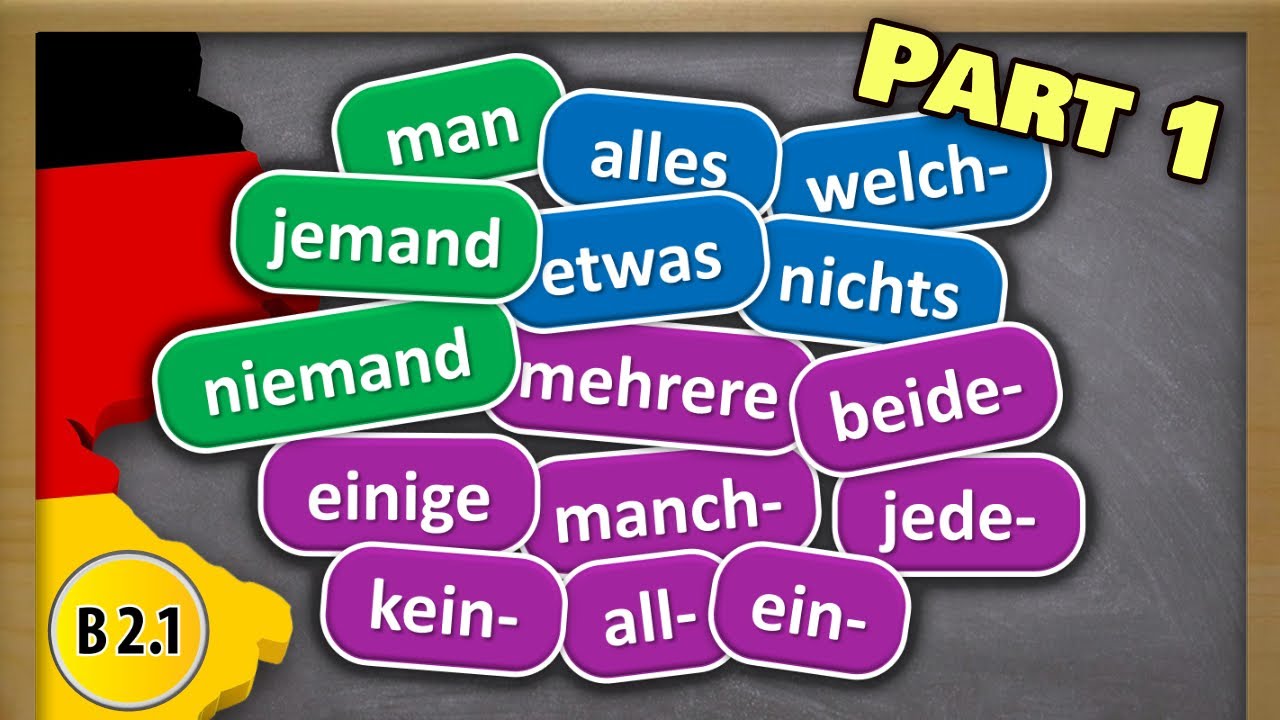
German indefinite pronouns (Indefinitpronomen) refer to people or things in a general, unspecified way. This is part 1 of a three-part series. It covers the three pronouns used only for people (man, jemand, niemand) and the four used only for things (alles, etwas, nichts, welch-). It is a B2 topic, useful from B1 on. Beginners do not need all the details yet.
What Are Indefinite Pronouns?
You use them when you do not address a specific person or talk about a specific thing. Compare:
| Specific | With indefinite pronouns |
|---|---|
| Luca, Fabio, möchtet ihr eine Cola? | Möchte jemand etwas trinken? Does anyone want something to drink? |
| Ja bitte, eine kalte Cola. | Ja bitte, etwas Kaltes wäre toll. Something cold would be great. |
| Nein danke, ich möchte keine Cola. | Nein danke, ich möchte nichts. No thanks, I do not want anything. |
Another example: someone is looking for his keys under the couch. Siehst du etwas? Do you see something? Ich sehe einiges, aber nichts, was du suchst. I see quite a few things, but nothing you are looking for.
The Three Parts of the Series
- Teil 1 (this lesson): three pronouns for people and four for things.
- Teil 2: the eight pronouns for both people and things.
- Teil 3: irgend-, which you can combine with many of them.
Indefinite Pronouns for People: man, jemand, niemand
They are only used for people, only in the singular and only with the third person singular of the verb: man hat, jemand hat, niemand hat. They are declined.
| man (one, you) | jemand (someone, anyone) | niemand (no one, nobody) | |
|---|---|---|---|
| Nominativ | man | jemand | niemand |
| Akkusativ | einen | jemanden | niemanden |
| Dativ | einem | jemandem | niemandem |
man
- Hier darf man nicht rauchen. You are not allowed to smoke here.
- Die Hitze macht einen müde. The heat makes you tired.
- Wenn man zu viel isst, wird einem schlecht. If you eat too much, you get sick.
- Wenn man Schokolade isst, geht es einem gut. If you eat chocolate, you feel good.
Einen and einem look like articles here, but they are indefinite pronouns. There is no genitive of man. Indefinite pronouns are never capitalised, except at the beginning of a sentence.
jemand
- Hat jemand meine Brille gesehen? Has anyone seen my glasses?
- Kennst du jemanden in Berlin? Do you know someone in Berlin?
- Lea hat jemandem Geld gegeben. Lea gave money to someone.
niemand
- Weiß niemand, was das heißt? Does nobody know what that means?
- Der Chef möchte niemanden sehen. The boss does not want to see anyone.
- Sag niemandem etwas darüber! Do not tell anyone anything about it.
In colloquial German you will often hear jemand and niemand without the endings -en and -em. In exams, especially at B2 and higher, write the correct endings. The genitive (jemandes Jacke) exists, but people say die Jacke von jemandem.
Indefinite Pronouns for Things: alles, etwas, nichts
They are only used for things and only in the singular. Etwas and nichts never change.
| Pronoun | Meaning | Examples |
|---|---|---|
| alles (Dativ: allem) | everything | Alles hat ein Ende, nur die Wurst hat zwei. Hast du schon alles gegessen? Have you already eaten everything? Sind Sie mit allem zufrieden? Are you satisfied with everything? |
| etwas | something, anything | Ist etwas passiert? Did something happen? Hast du schon etwas gegessen? Have you eaten anything yet? Kann ich dir bei etwas helfen? Can I help you with something? |
| nichts | nothing | Nichts geht über ein kühles Blondes. Nothing beats a cold beer. Ich kann leider nichts machen. Unfortunately there is nothing I can do. Tara ist mit nichts nach Italien gekommen. Tara came to Italy with nothing. |
Bei and mit are dative prepositions, but etwas and nichts stay the same. Nichts negates alles and etwas. Alles hat ein Ende, nur die Wurst hat zwei comes from a famous old German song and means that everything comes to an end.
welch-: some, any
Welch- refers to a noun that was mentioned before and takes its gender and number. It is mainly used in spoken German. The endings are the same as the adjective endings without an article.
| Maskulin | Neutrum | Feminin | Plural | |
|---|---|---|---|---|
| Nominativ | welcher | welches | welche | welche |
| Akkusativ | welchen | welches | welche | welche |
The dative and genitive forms are considered unschön and are practically never used.
- Hast du irgendwo die Milch gesehen? Ja, im Kühlschrank müsste noch welche sein. Yes, there should be some in the fridge. (die Milch, nominative)
- Gibt es noch Karten für das Konzert? Ja, es sind noch welche da. Yes, there are still some left. (plural)
- Weißt du, wo ich billige Stifte kaufen kann? Bei Aldi, dort kannst du bestimmt welche kaufen. At Aldi you can certainly buy some. (plural, accusative)
- Der Kuchen war lecker. Haben wir noch welchen? The cake was delicious. Do we have any left? (der Kuchen, accusative)
Three Bonus Tips
- etwas = a bit. Heute ist es etwas kalt. is the same as ein bisschen kalt or ein wenig kalt. Ich brauche etwas mehr Zeit. I need a little more time.
- etwas becomes was in spoken German: Hast du schon was gegessen? Habt ihr was von Linda gehört?
- vor allem means especially or particularly (besonders, hauptsächlich): Lisa mag Früchte, vor allem Äpfel und Birnen. Vor allem im Sommer ist es hier schön.
What to Learn Next
Continue with part 2: alle, jeder, einige, manche, mehrere, ein, kein and beide and then with part 3 about irgend-. For more on man, read The German Pronoun MAN. The adjective endings without an article are in German Adjective Endings: The Complete System.
Frequently Asked Questions
What are indefinite pronouns in German?
They are pronouns that refer to people or things in a general, unspecified way, for example man, jemand, niemand, alles, etwas and nichts.
What is the accusative and dative of man?
The accusative is einen and the dative is einem: Die Hitze macht einen müde. Wenn man zu viel isst, wird einem schlecht. There is no genitive.
Is it jemand or jemanden?
Jemand is the nominative, jemanden the accusative and jemandem the dative. In spoken German the endings are often dropped, but in exams you should write them.
Do etwas and nichts change their form?
No. They are never declined, not even after a dative preposition: bei etwas, mit nichts.
What does welche mean in Ich habe welche?
It means some and replaces a noun that was mentioned before: Gibt es noch Karten? Ja, es sind noch welche da. It is mainly used in spoken German.
Ready for more B1 and B2 grammar? Our B1 German online course gives you the structure, the practice and the vocabulary to get there.
