Sollen is the last of the six German modal verbs — the one you reach for when an obligation comes from someone else's expectation, not your own necessity. In this lesson, we cover the conjugation of sollen, its main uses, and how it differs from the stronger müssen.
Conjugation of Sollen
ich soll,...
Which pet do Germans love the most, the cat or the dog? This lesson counts down the ten most popular pets (beliebteste Haustiere) in Germany and teaches you their German names. A bonus tip shows you how to say male and female animals.
Haustier = House + Animal
Das Haustier (pet) is made of das Hau...

Even if you do not celebrate Christmas, these 20 words are useful to know. Weihnachten is Christmas, and this lesson covers decorations, traditions, food and drinks you find at a German Christmas market.
Decorations and Traditions
| German | English | Note |
|---|---|---|
| der Weihnachtsbaum | Christmas tree | Unter einem Weih... |
Dürfen means “to be allowed to”, and you will see it on signs, hear it from your boss and use it to ask for permission. In this lesson Luzi teaches you the conjugation of dürfen, three situations where you use it, and a bonus tip with common alternatives like verboten and erlaubt, the polite dürft...
Müssen means “to have to”, and the most important tip is to never translate it as “must”. In this lesson Luzi teaches you the conjugation of müssen, the four situations where you use it, and a bonus tip: nicht brauchen zu as a nicer alternative to nicht müssen.
A Quote With Three Modal Verbs
The v...
Wollen means “to want”, and it is stronger and less polite than möchten. In this lesson Luzi teaches you everything about the modal verb wollen: how to conjugate it, the four situations where you use it, and the difference between wollen and möchten, so you never sound rude when you order a coffee...
Mögen, möchten and gern all mean something like “to like” or “to want”, but you use them in very different situations. In this lesson Luzi explains the modal verb mögen with its conjugation and four uses, then shows you why möchten is not a verb of its own, and finishes with the bonus tip gern.
Wh...

How do you say bricks, leather or concrete in German? This lesson teaches you the most important materials (Materialien) with their articles, and how to ask what something is made of: Aus welchem Material ist ...?
How to Ask and Answer
Question: Aus welchem Material ist der Tisch? Answer: Er ist a...
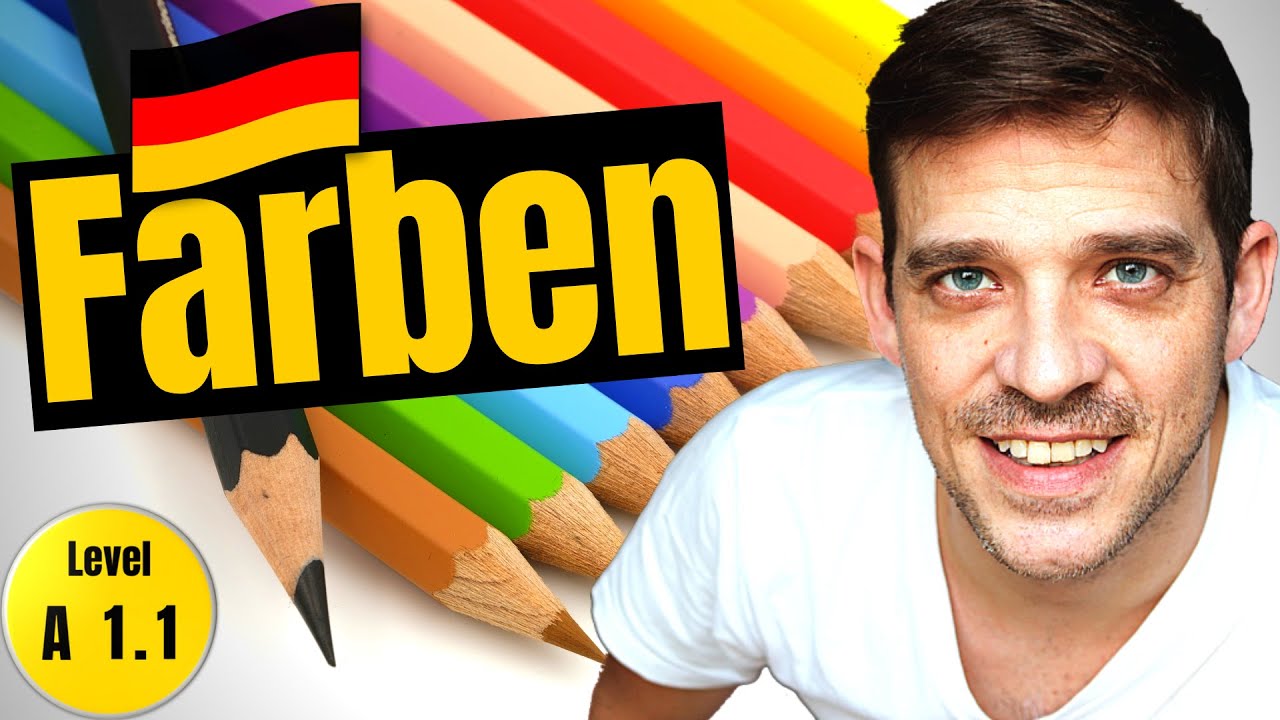
Learn all the colors in German, from the three primary colors to twelve more, and the words to describe them in detail. You also learn how to ask about colors: Welche Farbe hat ...?
The Three Primary Colors (Grundfarben)
| German | Meaning | Example |
|---|---|---|
| gelb | yellow | Die Sonnenblume ist gelb. |
| rot | red | Der Bus ist ro... |

A German walks up to you and asks Wie spät ist es? You can show him your phone, or you can tell him the time in perfect German. In this lesson Luzi shows you the two ways to tell the time in German, the easy one used on radio and TV and the everyday one used in conversation, and finishes with two ...