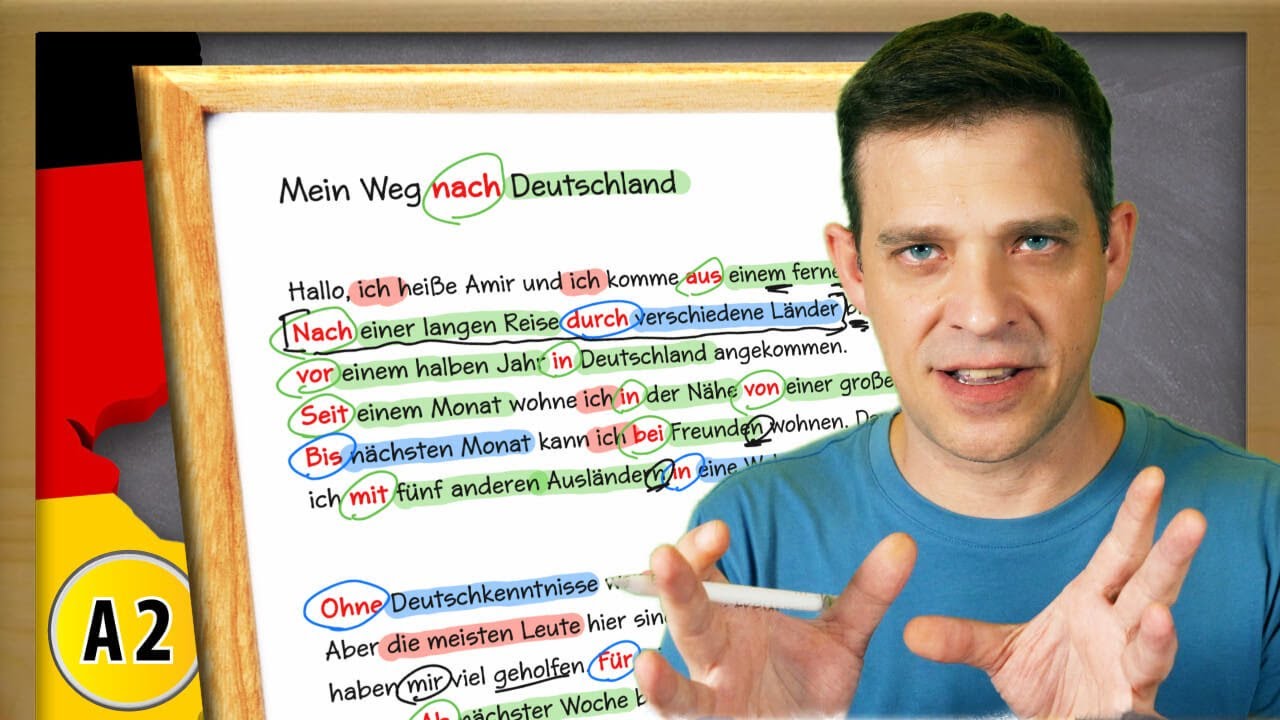
At A2 level German has 23 prepositions: six that always take the accusative, eight that always take the dative and nine two-way prepositions. This lesson is a text analysis. We take one short text about Amir, who came to Germany, and look at every preposition in it: which case it takes and why. Al...
"Seit" and "bis" already do double duty as German prepositions, but they can also connect two full clauses as conjunctions — and that second job comes with its own word order rule. This lesson focuses specifically on that conjunction use: how "seit" and "bis" link a main clause to a subordinate cl...
German actually has two ways to talk about the past — the Perfekt you probably learned first, and the Präteritum (simple past) — and knowing when to reach for each one makes a real difference in how natural you sound. This lesson covers what the Präteritum is, how to build it for both regular and ...
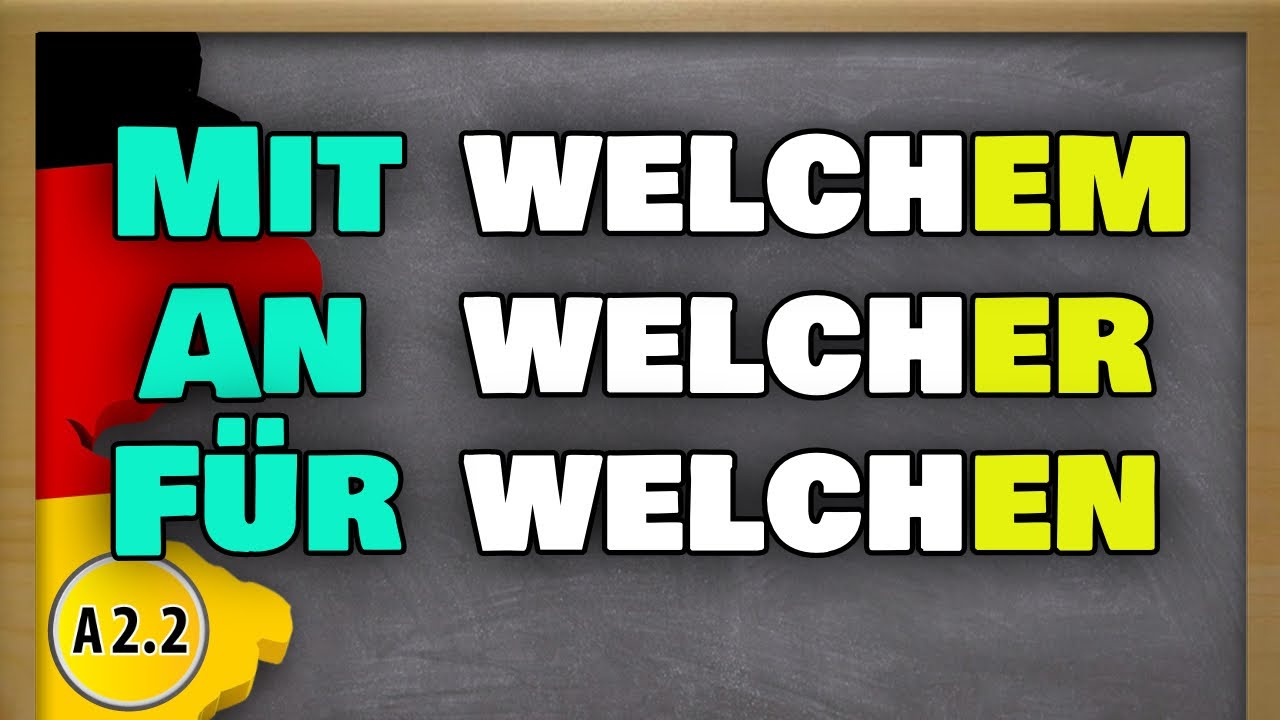
"Welcher" behaves exactly like the definite article "der" — which is great news, because it means you already know most of what you need to use it correctly with prepositions. This lesson shows how "welch-" changes its ending (welchem, welcher, welchen, and so on) depending on the case a prepositi...
"Aus" and "von" both get translated as "from" in English, which is exactly why they're one of the most common mix-ups for German learners at this level. Both take the dative case, so the grammar isn't the problem — the problem is knowing which situation calls for which word. This lesson breaks dow...
English speakers mix up "wenn" and "wann" more than almost any other German word pair, for a simple reason: English uses "when" for both jobs, while German splits it into two completely different words. This lesson explains exactly when each one applies, with example sentences that make the differ...
"Es gibt" is one of the first fixed expressions German learners meet, but it trips people up because it doesn't translate word-for-word into "there is/there are." The literal meaning is closer to "it gives," and understanding that origin actually makes the grammar around it much easier — including...
Asking a direct question can sound blunt in German, especially with people you don't know well — which is exactly why indirect questions are used so often in both spoken and written German. This lesson covers how to build a proper indirect question, including the different structures for questions...
Max hat lange geschlafen, doch er ist immer noch müde. This sentence uses one of the A2 conjunctions. In this lesson, Luzi from YourGermanTeacher shows you all A2 German conjunctions and connectors with example sentences from a day in Max's life, and explains in which position each one stands and ...
Würden, werden, worden, wurden, geworden: all five forms come from the same verb. In this lesson, Luzi from YourGermanTeacher explains why werden is one of the most important and most confusing German verbs, and shows you its five uses with example sentences.
Why Is werden So Confusing?
There are ...