In the accusative case, only the masculine possessive article changes: mein becomes meinen. This lesson shows you the possessive articles (mein, dein, sein ...) in the accusative and compares them with the nominative. It does not explain the basic rules of the accusative, so if you are unsure abou...

Reflexive verbs are complicated, but the German language uses them every day in every conversation. This lesson teaches you the reflexive pronouns in the accusative case, the sentence structure with many examples, and two bonus tips that you should not miss.
First the Bad News
There is no rule tha...
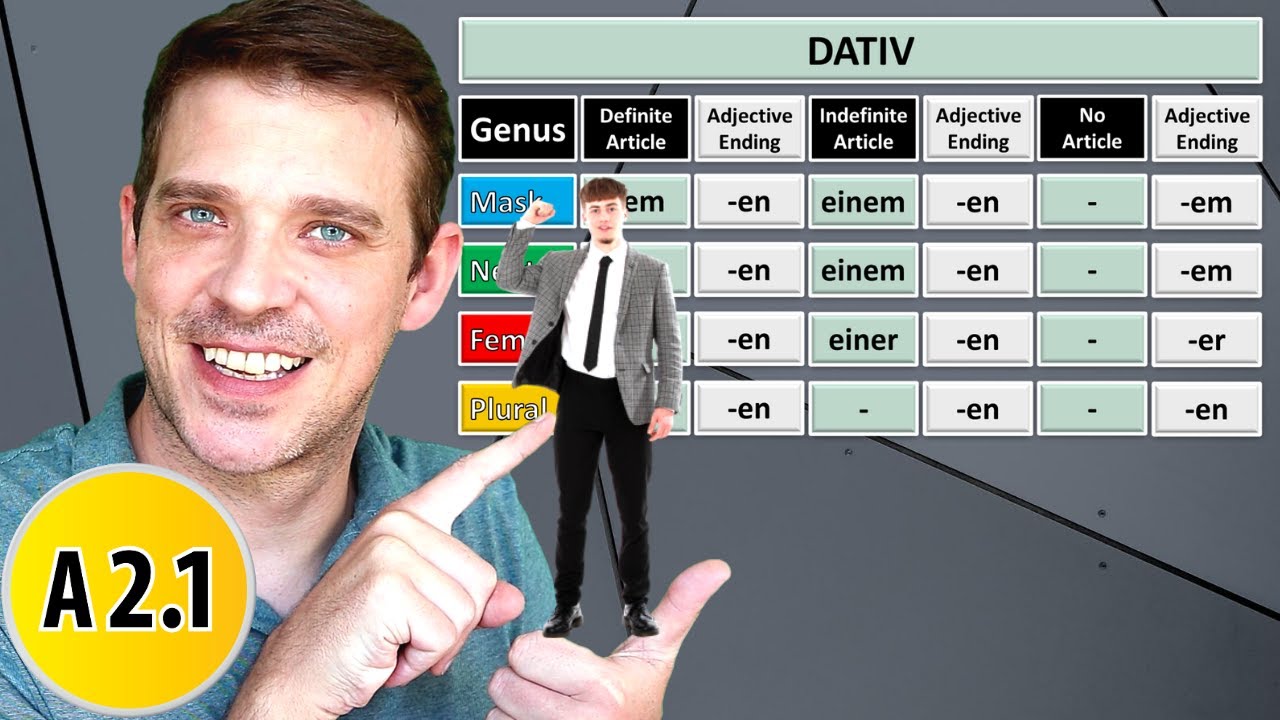
In the dative case there is good news: with an article, every adjective ends in -en. This lesson shows you how to decline German adjectives in the dative with definite and indefinite articles, and it finishes with two bonus tips: what to do with two or more adjectives, and the endings without an a...
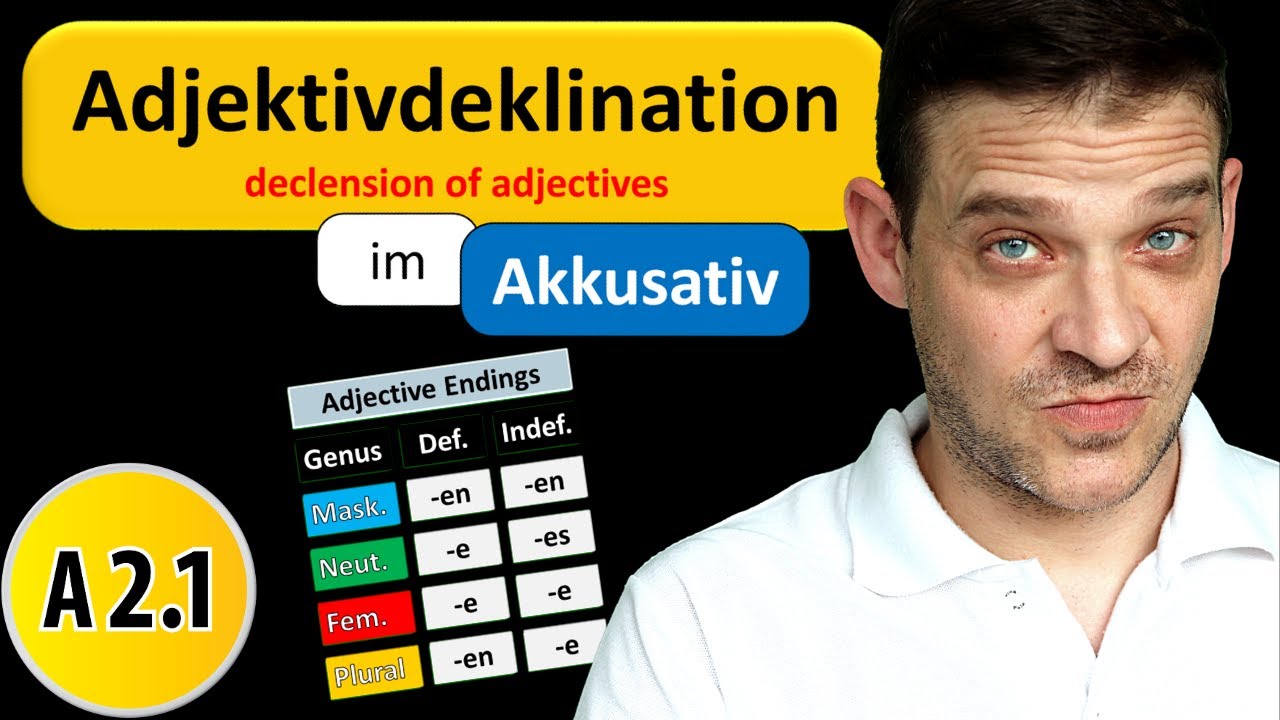
In the accusative case, only one gender changes its adjective ending compared to the nominative: the masculine. This lesson shows you how to decline German adjectives in the accusative with definite and indefinite articles, with tables and example sentences you can copy.
Before You Start: The Nomi...
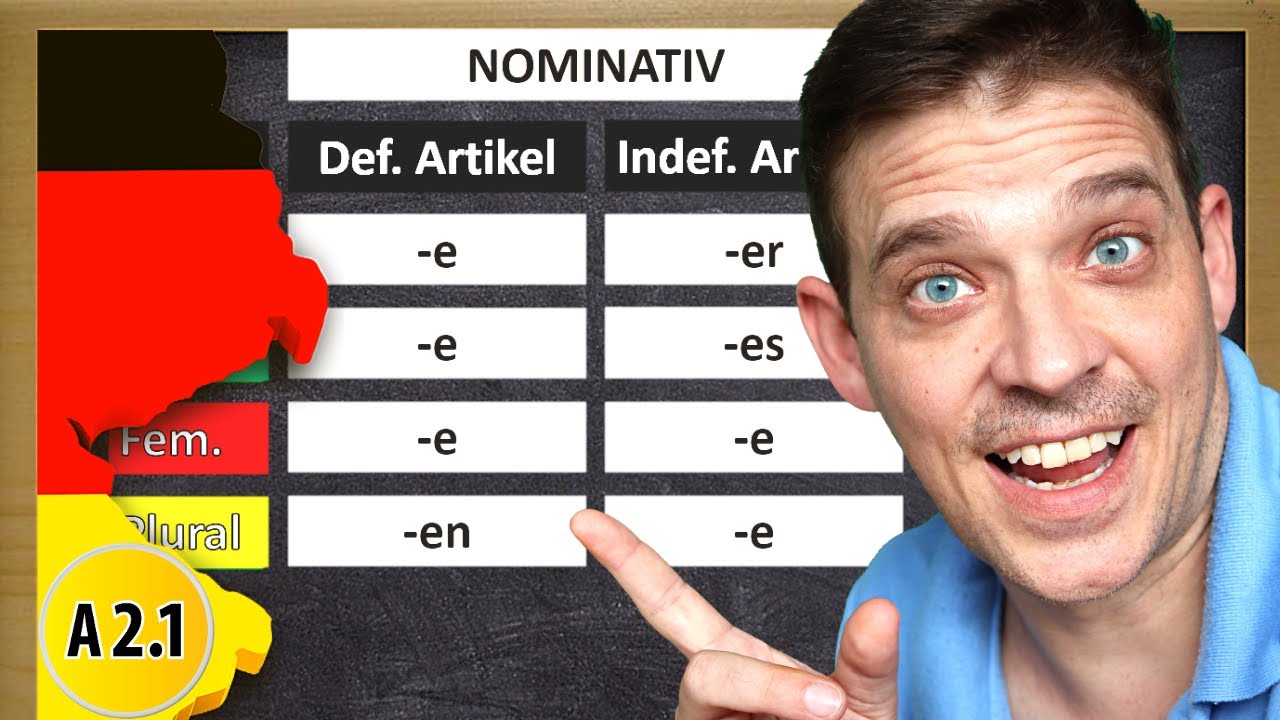
German adjective endings look chaotic until you see the system behind them. This lesson explains why adjectives get endings, when you need them and how the nominative endings work, including a long bonus tip on the whole concept.
When Do You Have to Decline an Adjective?
You decline an adjective w...

German has three steps for comparing things: Positiv, Komparativ and Superlativ. Add -er for the second step and -sten for the third, then learn the few exceptions, and you can compare almost anything.
Step 1: The Positiv
The Positiv is simply the normal adjective: schnell (fast), alt (old), klein...

Seit, zwischen, über and von ... an are the four time prepositions you need for A2, and seit is the trickiest. Most of them are similar to English, but seit works differently, because it can express a duration and a point in time.
Overview
| Preposition | Meaning | Case | Express |
|---|---|---|---|
| zwischen | between | Dativ | period | ...

Nicht stands in front of the part of the sentence you want to negate, except when you negate the verb. This is Part 2 of the series on the position of nicht. Part 1 explains the rules, and here you get all 8 situations with example sentences, plus the exception for sentences with two verbs.
The Tw...