Lassen is one of the most important and most confusing German verbs. Does it mean let, leave, or something else? In this lesson, Johannes from YourGermanTeacher shows the six meanings of lassen, how to conjugate it, and how to build the Perfekt with either gelassen or lassen.
Conjugation
| Person | las | ...
|---|

Ordering food in Germany is easy once you know the steps and a few polite phrases. In this lesson, Johannes from YourGermanTeacher takes you through a full restaurant visit, from finding a table to paying and tipping, and adds the customs you should know.
Before You Sit Down
Most German restaurant...
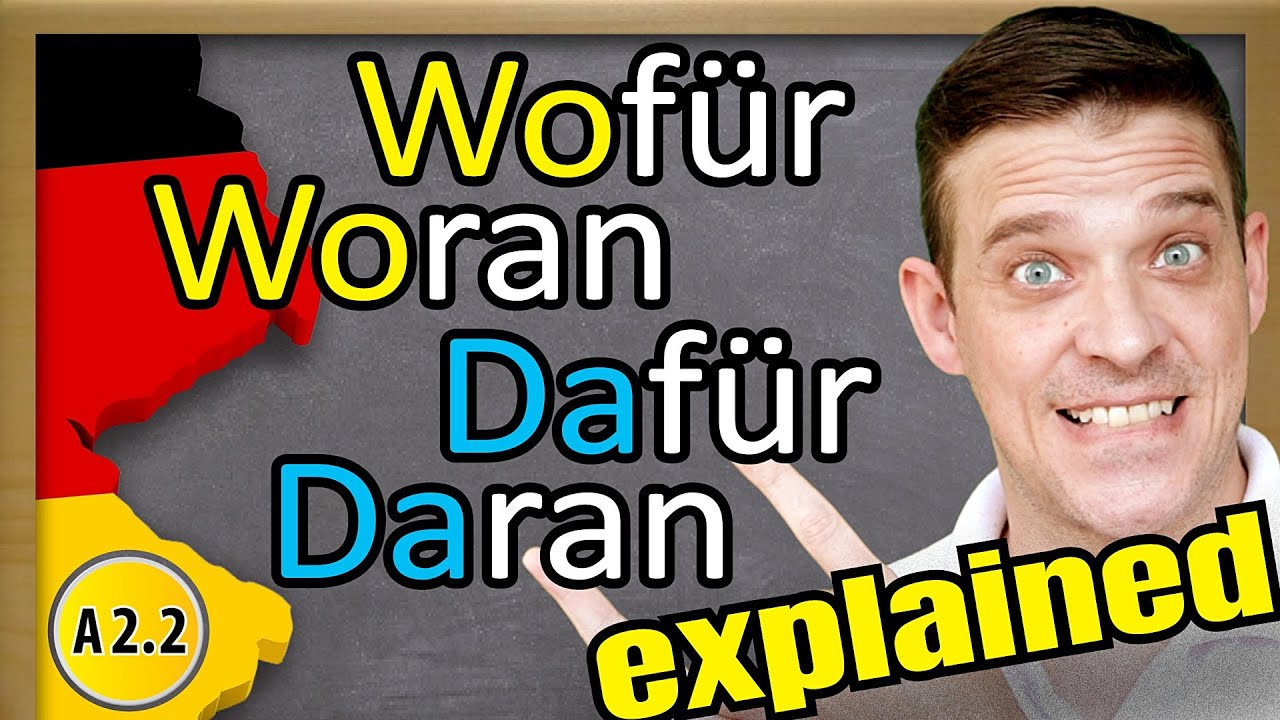
Da-words like darauf, davon and damit look confusing, but they follow one simple rule. In this lesson, Luzi from YourGermanTeacher shows you how da-compounds (Präpositionaladverbien) and the matching wo-question words work, with real-life example dialogues. The topic is usually taught at the end o...

Getting around Germany is easy once you know the transport vocabulary. In this lesson, Johannes from YourGermanTeacher walks you through every way of travelling, from planes and trains to buses, taxis, bikes and ferries, with the words and phrases you really need.
By Plane and Car
| German | English |
|---|---|
| das | ...

German idioms are the fastest way to sound like a native speaker. In this lesson, Luzi from YourGermanTeacher explains 20 well-known German idioms (Redewendungen) with their literal meaning, the English equivalent and a typical situation where you can use them.
A Note on Level
Idioms are usually t...
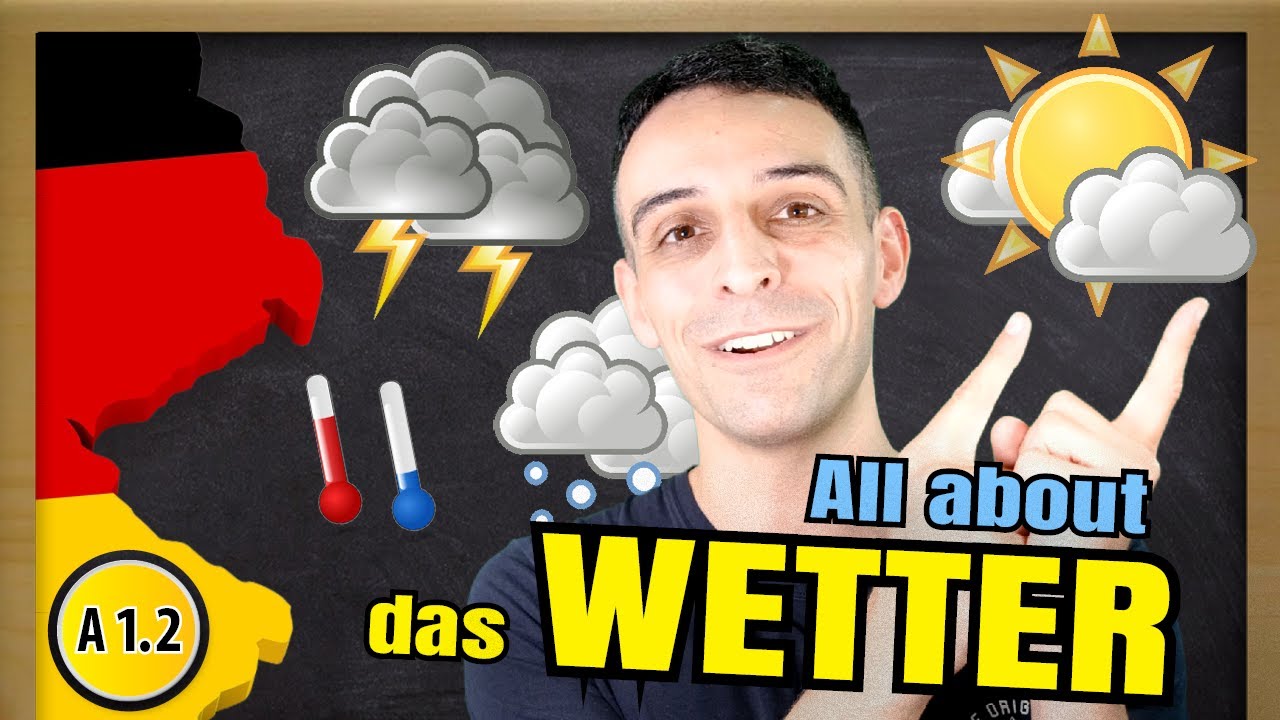
Talking about the weather is the classic German small talk topic. In this lesson, Johannes from YourGermanTeacher shows you the seasons, the temperature words, the little word es, and matching nouns, verbs and adjectives for every kind of weather. You also get ready-made small talk questions and a...
German adjective endings look like a jungle of tables, but there is a system behind them. Instead of memorising many different tables, this lesson shows you the concept: where the case, gender and number of a noun are shown, and what that means for the adjective ending. Then you can put together t...
Nine German prepositions can take the accusative or the dative, and the movement in the sentence tells you which one to use. These are the local two-way prepositions (lokale Wechselpräpositionen). The lesson first gives you one simple rule, then goes through all nine prepositions with a pair of ex...

Thirty irregular verbs is all you need to cover the A2 level, and this lesson goes through every one of them. The verbs come in alphabetical order, each with its meaning, its participle and an example sentence. The video suggests that you write your own list while you watch, and that is still the ...
In the dative case, every possessive article gets an ending: meinem, meiner, meinen. This lesson shows you the possessive articles (mein, dein, sein ...) in the dative case and compares them with the nominative. It does not explain the basic rules of the dative, so if you need those first, read th...