Reflexive verbs are complicated, but the German language uses them every day in every conversation. This lesson teaches you the reflexive pronouns in the accusative case, the sentence structure with many examples, and two bonus tips that you should not miss.
First the Bad News
There is no rule tha...

The Perfekt is the most important German past tense, especially when you speak. This lesson shows you when to use it, how to form the past participle of regular, irregular and separable verbs, and how to build the complete sentence.
What Is the Perfekt?
The Perfekt (das Perfekt) is the past tense ...
Many German verbs come with a fixed preposition, and you have to learn them together. This lesson teaches the 18 verbs with prepositions that are important at A2 level and are often used in proficiency exams. They are in alphabetical order, each with the case that follows the preposition and an ex...
German has six tenses, but knowing just two of them, the present tense and the present perfect, lets you handle most conversations. In this beginner lesson you see all six tenses first, then learn the present tense (das Präsens) in detail: when to use it, how to conjugate regular and irregular ver...
Six German prepositions always take the accusative: für, bis, gegen, ohne, durch and um. This lesson teaches them with a one-minute listening challenge and a short story. Listen first, try to find all six, then check with the explanations and a bonus tip on durch and um.
The One-Minute Challenge
I...
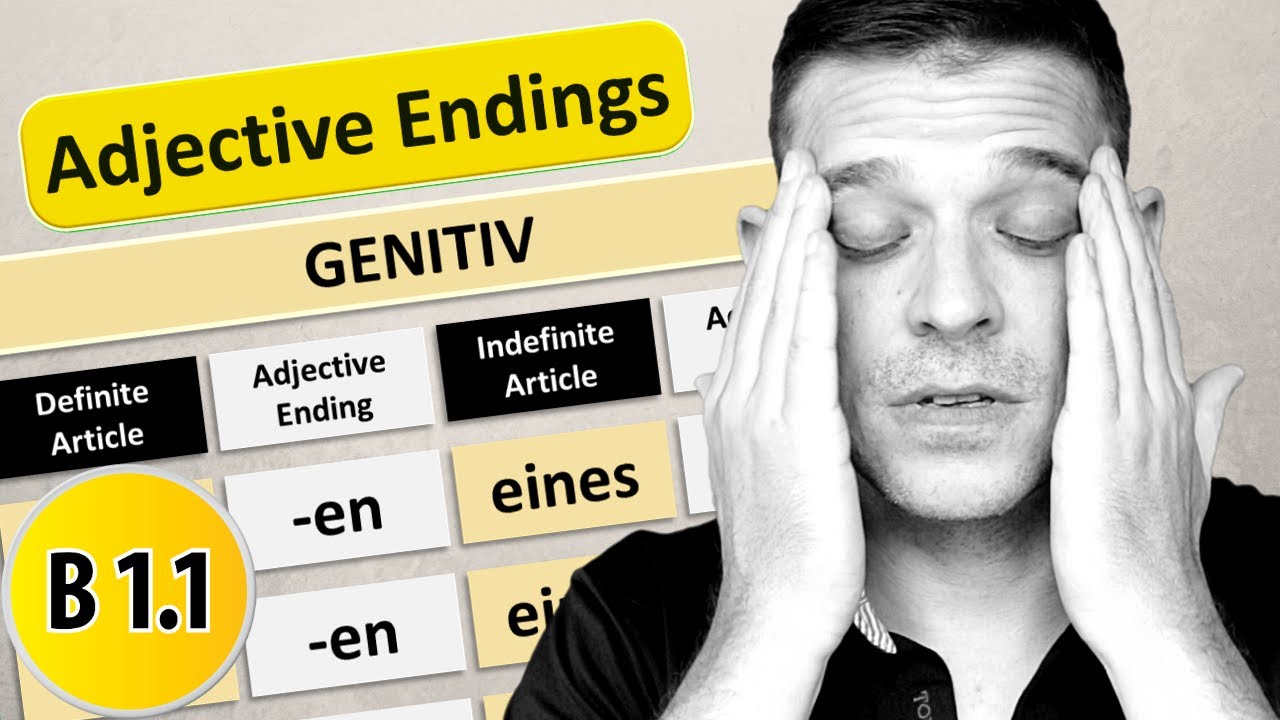
If you know the genitive case, you only need one new rule for its adjective endings: with an article they are almost exactly the same as in the dative. The exception is the zero article. This lesson shows you the endings with tables and examples.
Before You Start
You need to know the genitive arti...
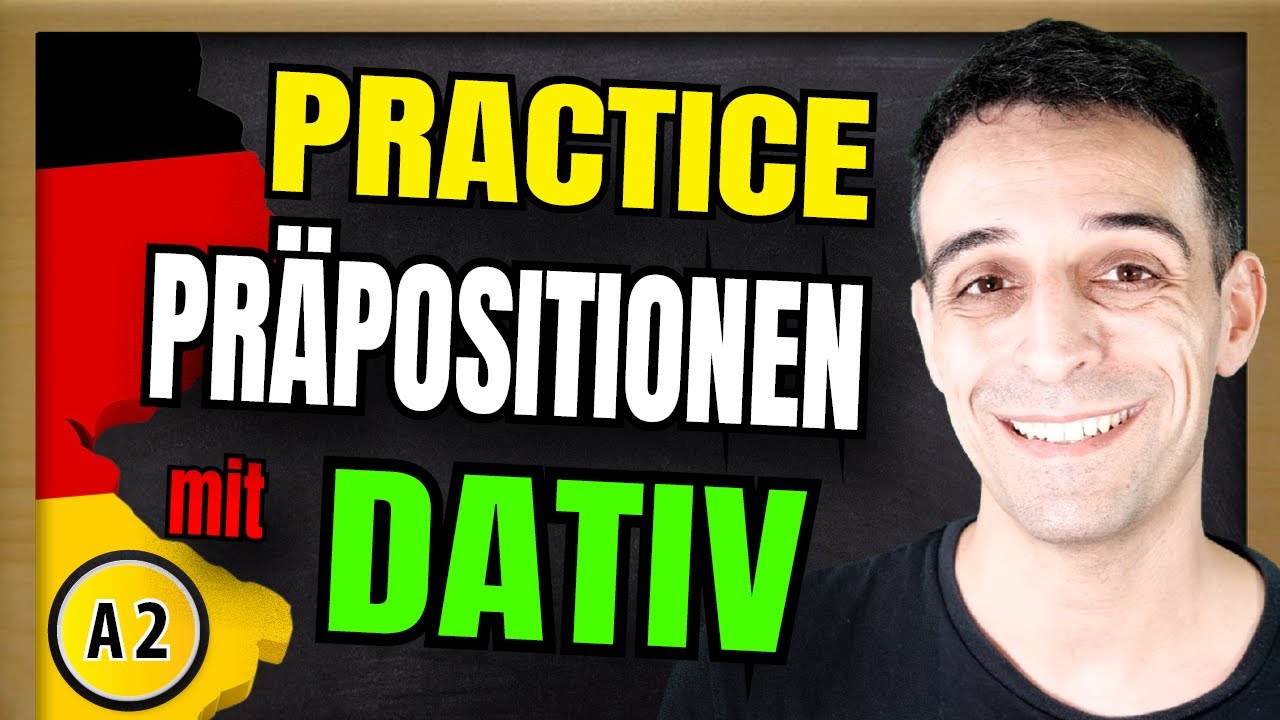
Ten German prepositions always take the dative, and this lesson teaches them with a short story. Before the explanation you get a listening challenge: listen to a story, and write down every preposition that only uses the dative. The lesson is in German only (the task is explained in English), so ...
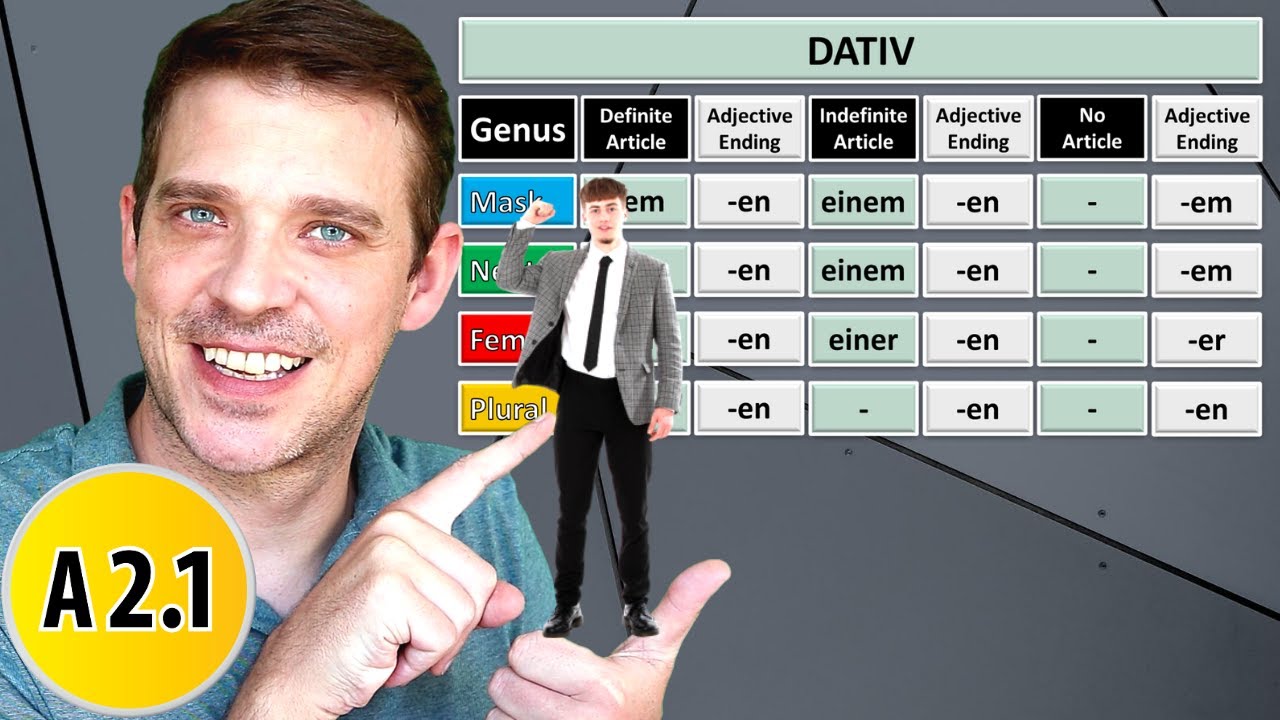
In the dative case there is good news: with an article, every adjective ends in -en. This lesson shows you how to decline German adjectives in the dative with definite and indefinite articles, and it finishes with two bonus tips: what to do with two or more adjectives, and the endings without an a...

Wegen gives a reason, trotz gives a counter-reason, and both always take the genitive. This lesson explains what they mean and how to use them with plenty of examples, and it ends with two tips on how to say the same thing with weil, deshalb, obwohl and trotzdem. The video is taught entirely in Ge...
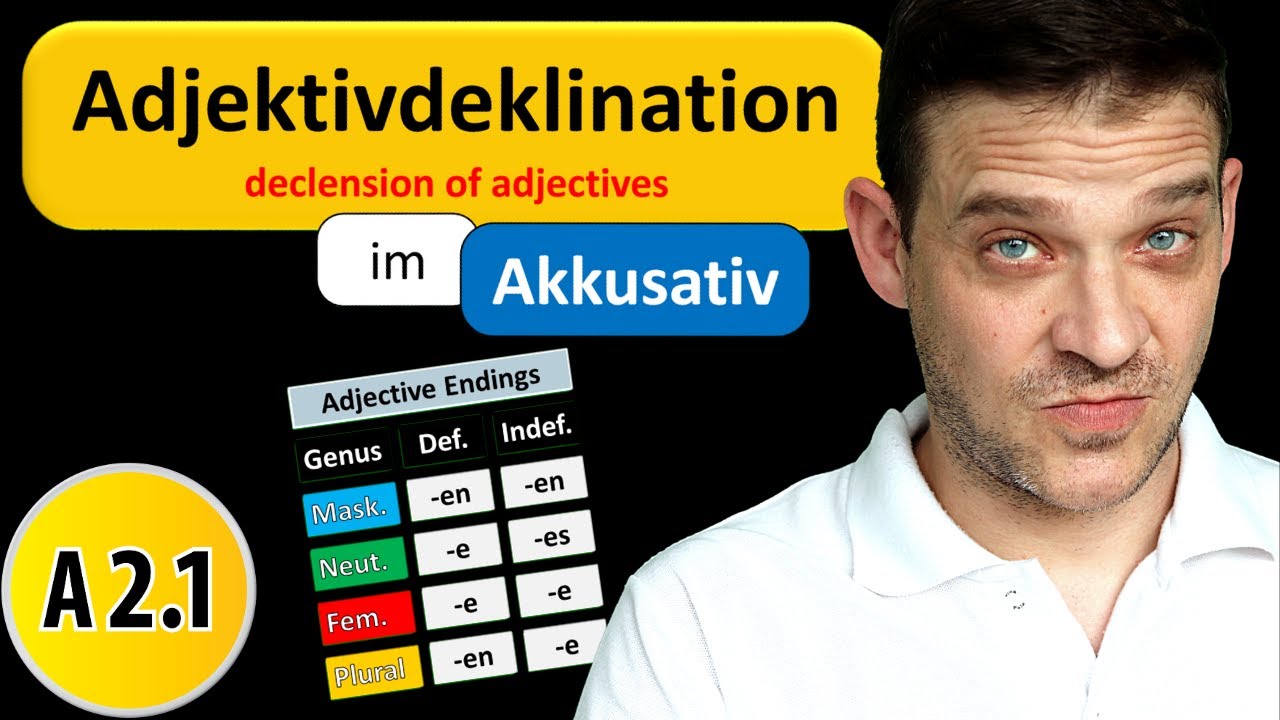
In the accusative case, only one gender changes its adjective ending compared to the nominative: the masculine. This lesson shows you how to decline German adjectives in the accusative with definite and indefinite articles, with tables and example sentences you can copy.
Before You Start: The Nomi...