Würden, werden, worden, wurden, geworden: all five forms come from the same verb. In this lesson, Luzi from YourGermanTeacher explains why werden is one of the most important and most confusing German verbs, and shows you its five uses with example sentences.
Why Is werden So Confusing?
There are ...
Moritz kann gut Tennis spielen. Du möchtest Deutsch lernen. Morgen werde ich Carla im Garten helfen. None of these sentences has a zu, even though each has a second verb in the infinitive. In this B1+ lesson you learn the exceptions to the Infinitivsatz mit zu: the four groups of verbs where you c...
Würden, hätten and wären are three super important verbs in Konjunktiv II, and this lesson helps you choose the right one every time. In this practice video, Johannes from YourGermanTeacher gives you 15 sentences. Your task is to decide: würden, hätten or wären?
The Three Verbs in Short
| Verb | Meanin | ...
|---|
These are the 20 most common German verbs that can be used with zu and an infinitive. In this lesson, Luzi from YourGermanTeacher goes through them alphabetically, with example sentences and a bonus tip about the special verb brauchen. There are a few more verbs, but these are the ones you can use...
Würden, hätten and wären are three of the most important words you need in Konjunktiv II. In this lesson, Johannes from YourGermanTeacher shows you how to use them to express wishes and dreams, step by step with example sentences.
What Is Konjunktiv II?
In English it is called the general subjunct...
Ich hoffe, die B1-Prüfung zu bestehen. Es ist interessant, Deutsch zu lernen. Ich habe Lust, morgen Tennis zu spielen. These are three examples of the German Infinitivsatz mit zu. In this B1.1 lesson, Luzi from YourGermanTeacher shows you when you can use it and how to build it.
The construction i...
Most German verbs form the Perfekt with haben, but some use sein instead. In this practice lesson, Johannes from YourGermanTeacher gives you 15 sentences in the Perfekt. Your task: decide which auxiliary verb you need, haben or sein, and do not forget the conjugation.
This video is about practice ...
In English it is simply this, but in German you have to choose between dieser, diese, dieses, diesen and diesem. In this lesson, YourGermanTeacher shows you how to form the German demonstrative pronouns (Demonstrativpronomen) and when to use them.
What Are Demonstrative Pronouns?
The name comes fr...
Some German verbs always need the dative case, and the best way to learn them is to practise. In this practice lesson, Johannes from YourGermanTeacher gives you two exercises with 10 sentences each: first A1 dative verbs, then personal pronouns in accusative and dative.
Warm-Up: the Dative Verb he...
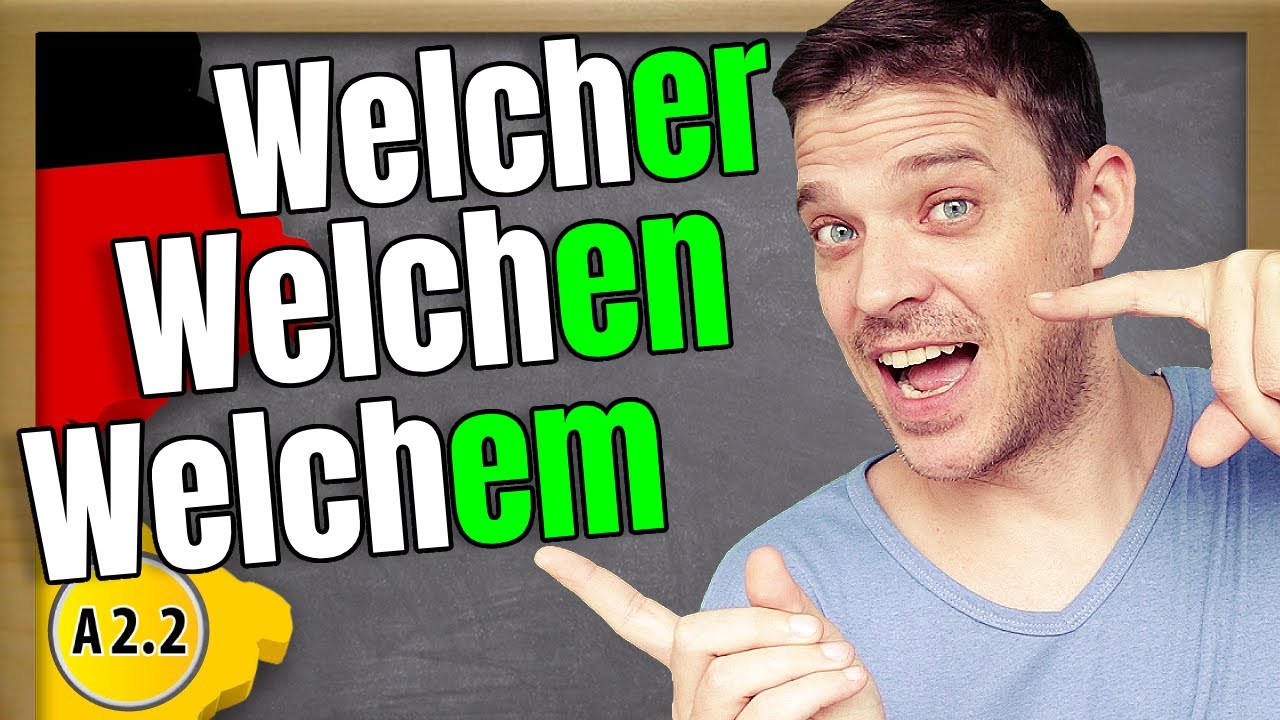
Welcher Tag ist heute? Welches Handy hast du gekauft? In English you only need which, but in German welch- changes its ending. In this lesson, YourGermanTeacher explains when, how and why, with examples for every case and four bonus tips.
The Endings at a Glance
Welch- is a question word that beha...