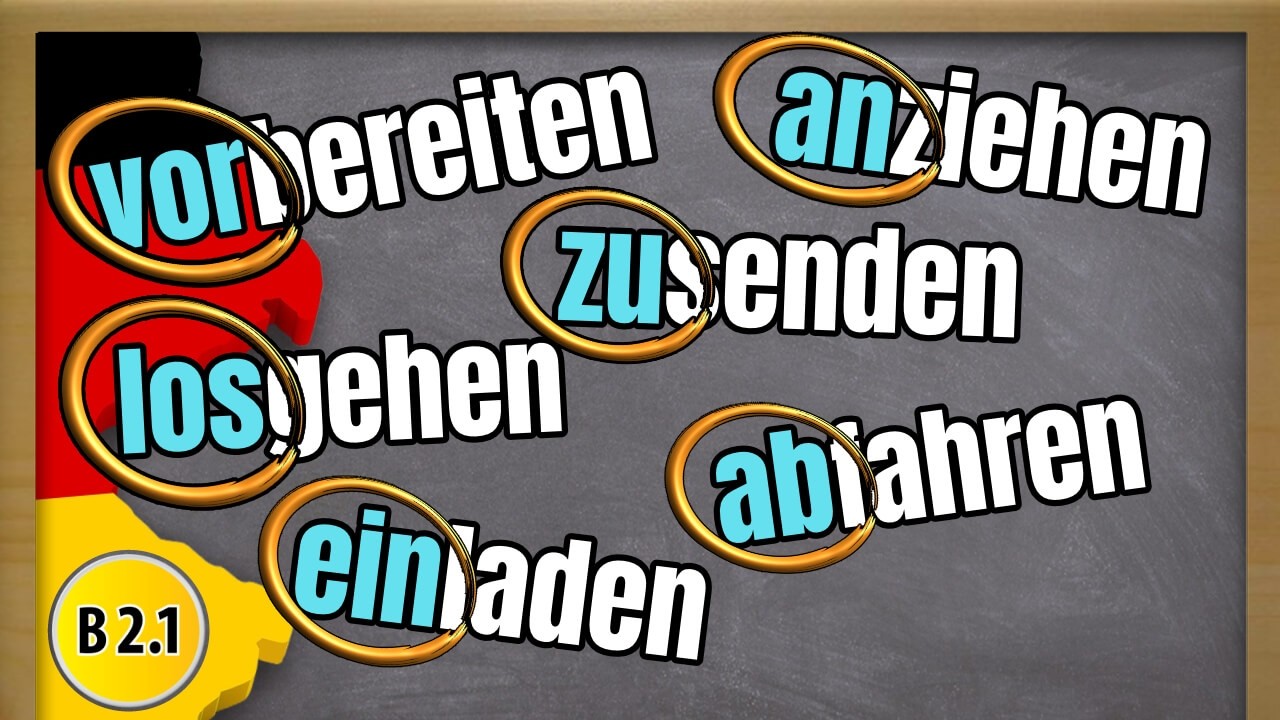
Take a simple verb like fahren, add a prefix, and you get a new verb with a new meaning. Do these prefixes have a specific meaning that you can apply to other verbs too? Good news: yes, they do. Bad news: not to all verbs. This lesson explains the most important meanings of 16 prefixes for separab...
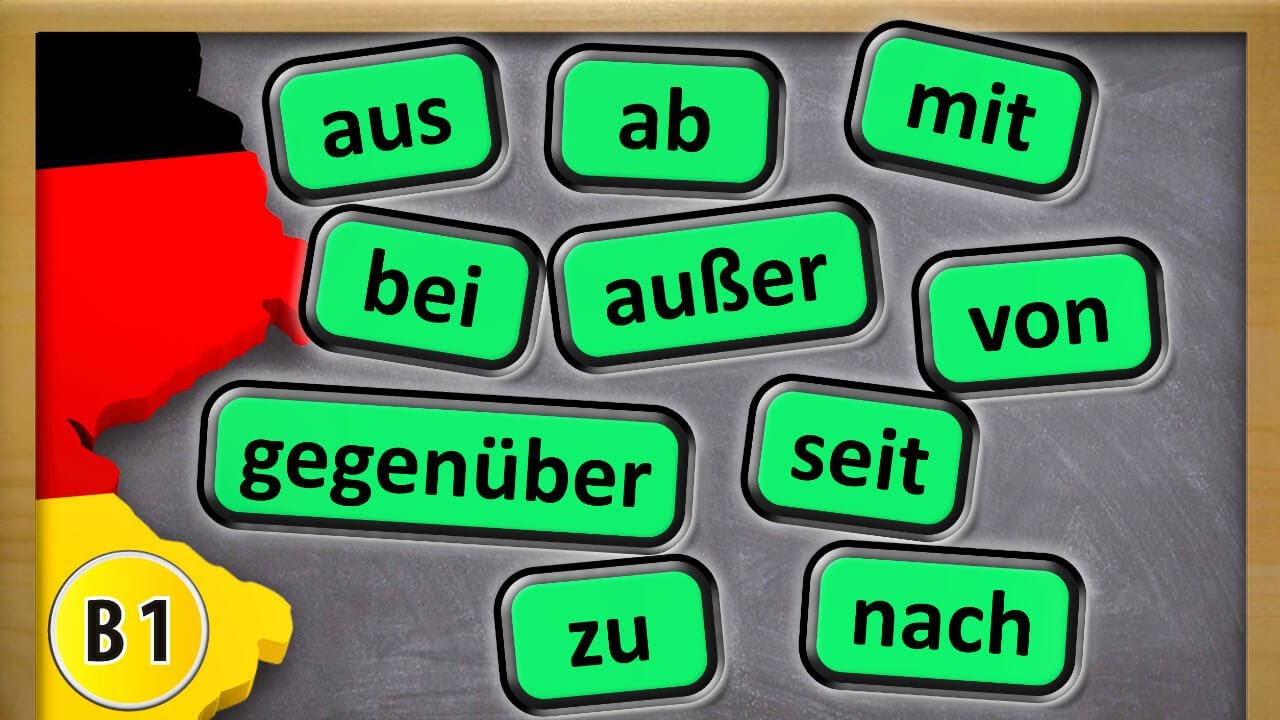
German has 25 prepositions that always and only take the dative case, but ten of them cover everything you need from A1 to B1. You will barely hear or use most of the other fifteen. This lesson goes through the top 10 in alphabetical order, with a short meaning, the type of preposition and example...
A video about und? How boring! No, ganz und gar nicht. That answer is already one of 10 useful German expressions with und that you can use in daily life. For each expression this lesson gives you the meaning and two short dialogues between person A and person B, so you can see in which situation ...
The position of gern is quite annoying, even for us teachers to explain, but five rules will cover most situations. The position does not depend on the word itself. It depends on the type of sentence you use: a main clause, a subordinate clause, a question, a negative sentence or a sentence that s...

Only about 14 percent of the German verbs from A1 to B1 use sein as the auxiliary verb in the Perfekt, and 20 of them are enough to cover the vast majority. According to the official Goethe vocabulary list, there are 690 verbs from A1 to B1 including verbs with prefixes. 86 percent of them use hab...
"Obwohl" and "trotzdem" both let you express a contradiction in German — but mixing up their word order is one of the most common B1 mistakes. One is a subordinating conjunction, the other is an adverb, and that single grammatical difference changes where the verb has to go. Here's how to tell the...
Look at this sentence: Meiner Meinung nach sind die Gäste nach und nach nach Hause gegangen. It contains four times the word nach, and each one does a different job. In German nach can be a preposition (for time, for place and for how), a verb prefix and an adverb. This lesson unpacks all of them,...
German has a natural alternative to "müssen" that native speakers use constantly in everyday conversation: nur/nicht/kein + brauchen + zu + infinitive. It sounds intimidating written out like that, but once you see the pattern and a few examples, it clicks fast — and you'll start hearing it everyw...

The verb sein is not only the most important verb in German, you can also combine it with other words, and Germans do that every day in spoken German. If you want to understand Germans better and sound more German, these combinations will help you. This lesson covers 14 of them: nine that you can ...
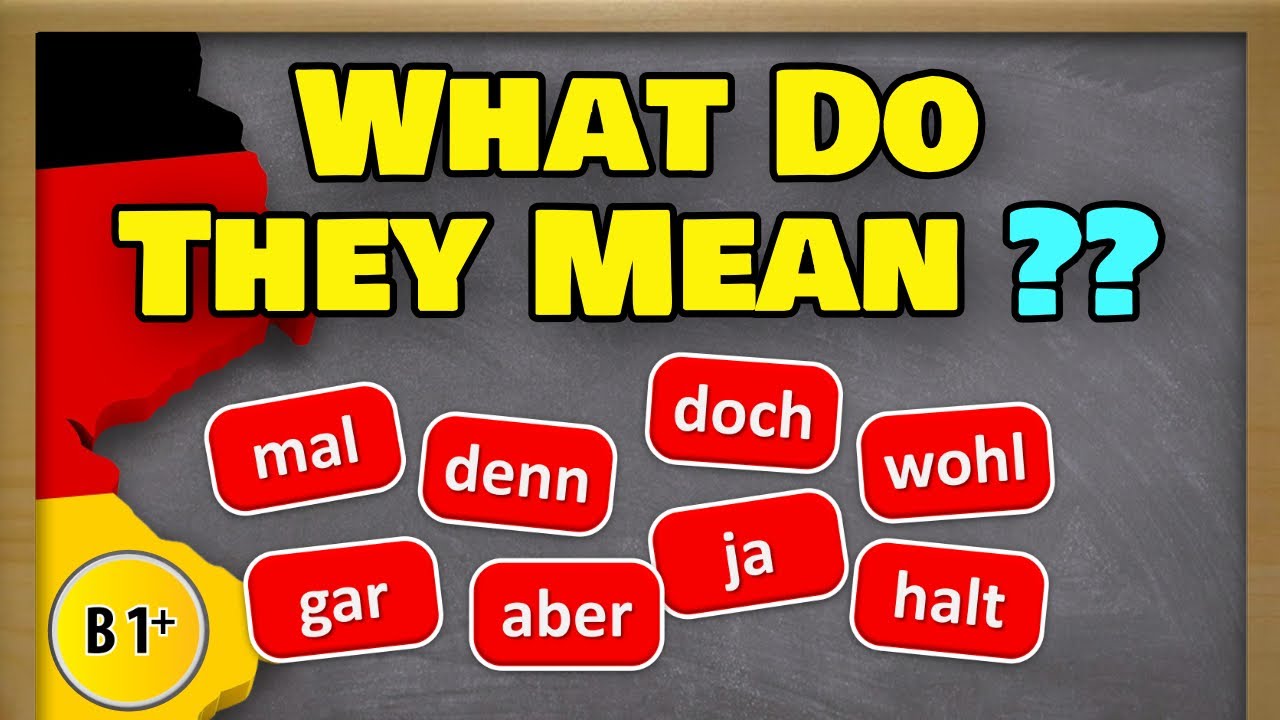
Compare Das ist spannend with Das ist ja spannend, Das ist aber spannend and Das ist wohl spannend: one small word changes the whole feeling of the sentence. These small words are called Modalpartikeln (modal particles). You have definitely seen them, and heard them even more. There are about 20 i...