Ich kann Deutsch sprechen, aber ich muss noch viel lernen, und ich will besser werden. In this complete guide you learn all six German modal verbs: können, müssen, wollen, dürfen, mögen and sollen. You get the present and Präteritum tables, the sentence structure, the meaning of each verb and the ...
Not every relative clause waits patiently at the end of the sentence — sometimes it interrupts, sitting right in the middle of your main clause, and that's what German calls an eingeschobene Relativsatz (embedded relative clause). After a quick review of how relative clauses work in general, this ...
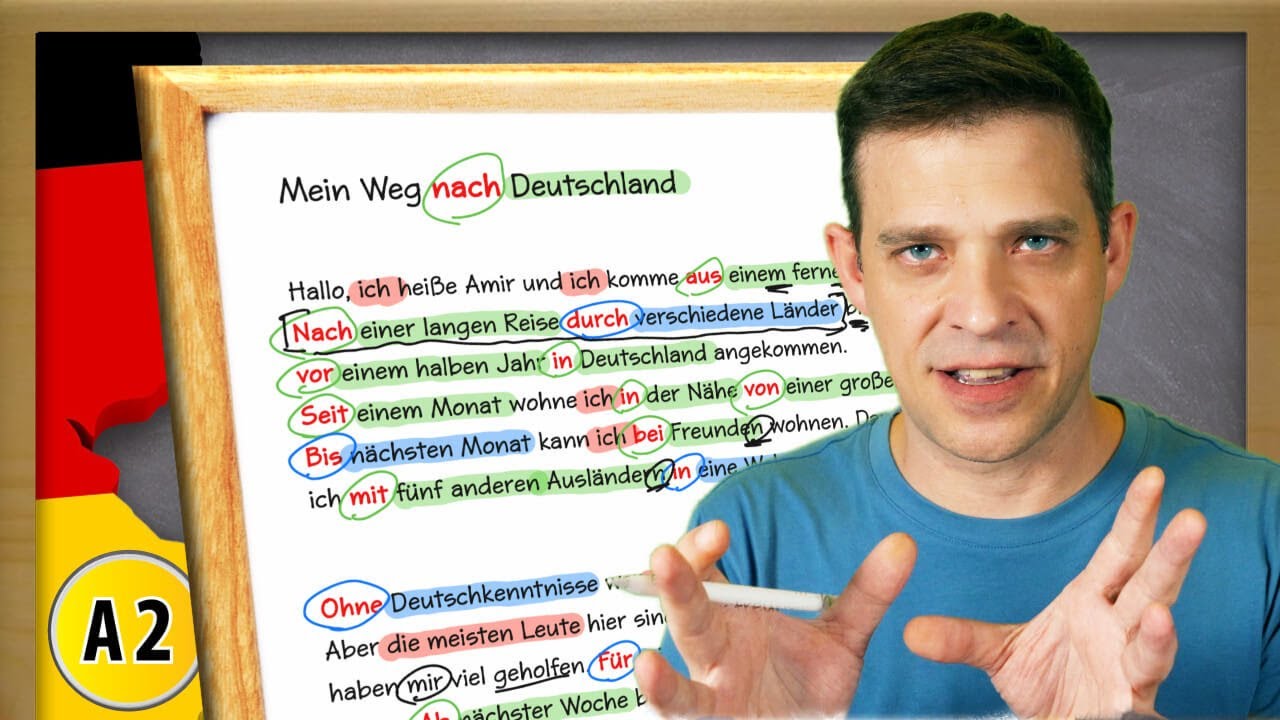
At A2 level German has 23 prepositions: six that always take the accusative, eight that always take the dative and nine two-way prepositions. This lesson is a text analysis. We take one short text about Amir, who came to Germany, and look at every preposition in it: which case it takes and why. Al...

How about making your German learning significantly more efficient? Verbs are the backbone of any sentence and in this German video lesson, we reveal the Top 50 most common used German verbs - the true workhorses of a language.
Verbs Are the Backbone of Every German Sentence
Verbs are the backbone...
Most textbooks teach you adjective endings after definite and indefinite articles — but leave you guessing what happens after mein, dein, sein or kein, and that gap trips up a lot of B1 learners. The good news: possessive articles (mein, dein, sein, unser, euer, ihr) and the negative article (kein...
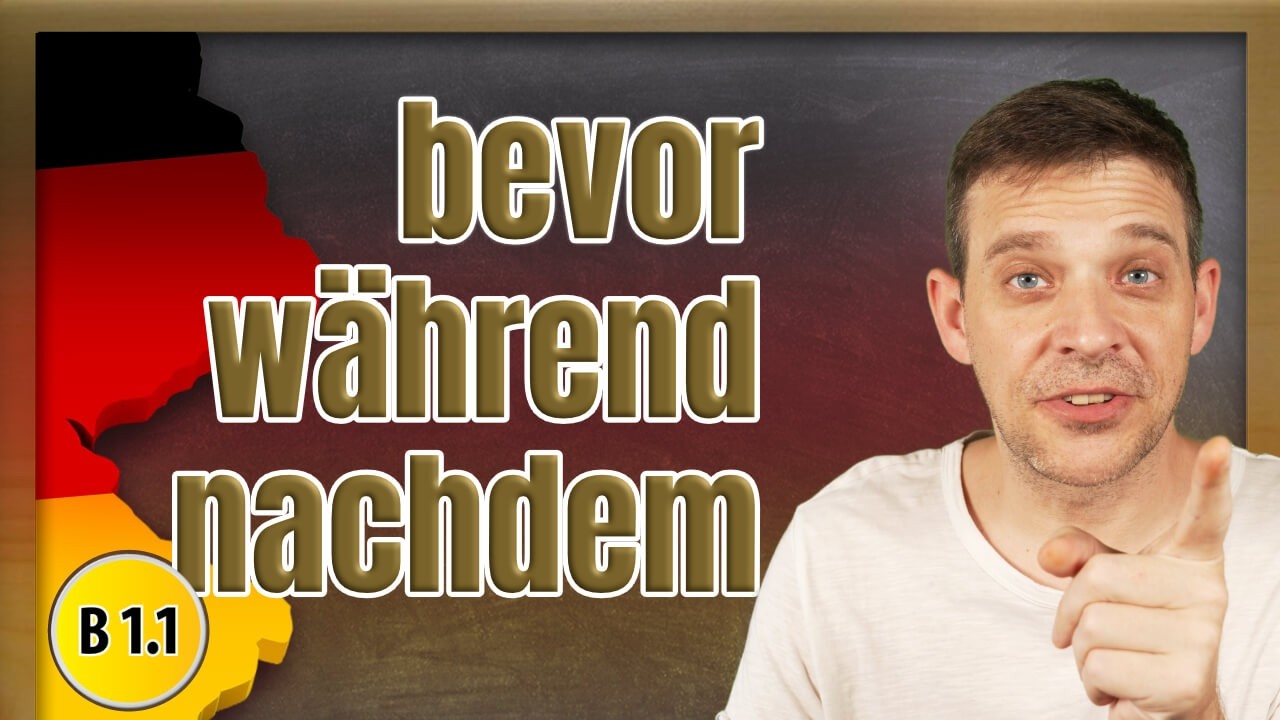
Telling someone what happened before, during, or after something else is one of the most useful things you can do in a German conversation — and three small conjunctions, bevor, während, and nachdem, do exactly that. Here's how each one works, plus one bonus meaning of während that catches a lot o...
Irgendwann wohne ich in einem schönen Haus am Meer. The little word irgend- turns a question word or an indefinite word into something unspecific: some time, somewhere, someone, somehow. This lesson shows you all the possible combinations with irgend- and how to use them in everyday German.
Irgend...

At A1 level you need 20 German prepositions: five take the accusative and fifteen take the dative. This lesson is a text analysis. We read a short text about Lars and Maria on vacation in Italy and look at every preposition: which case it takes and how you can see it. The bonus tip at the end look...
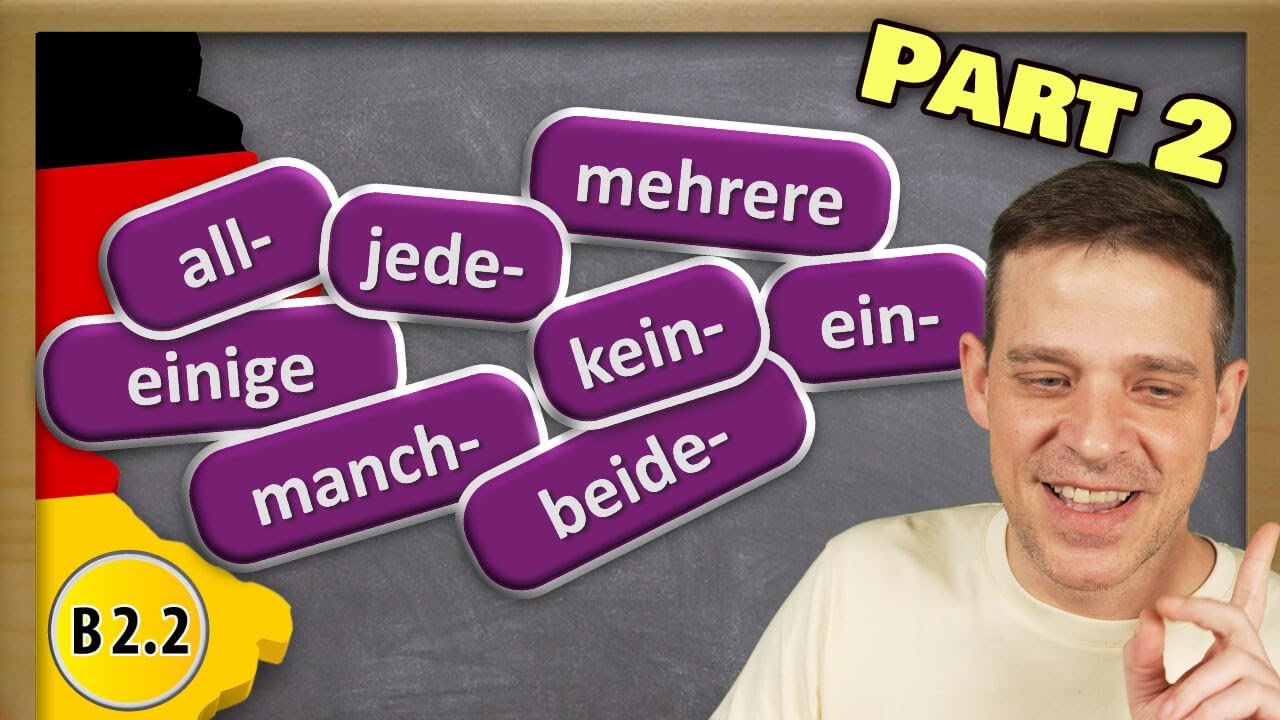
Part 2 of the indefinite pronouns covers the eight that can be used for both people and things: alle, jeder, einige, manche, mehrere, ein, kein and beide. This is a long and detailed B2 lesson with many special rules, so you should be at B2 or at least late B1 level. If you have not seen part 1 ab...
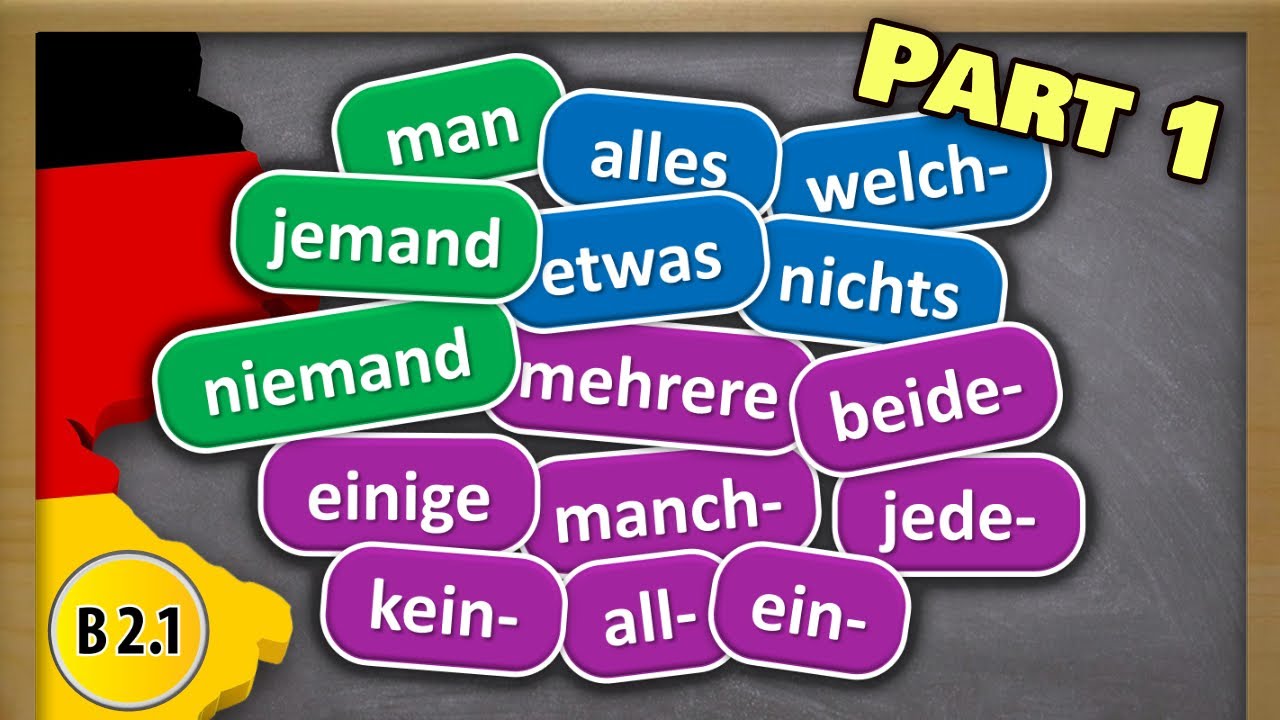
German indefinite pronouns (Indefinitpronomen) refer to people or things in a general, unspecified way. This is part 1 of a three-part series. It covers the three pronouns used only for people (man, jemand, niemand) and the four used only for things (alles, etwas, nichts, welch-). It is a B2 topic...