This is not a grammar lesson, it is real German listening practice: Luzi and Johannes answer 15 questions that you, their viewers, sent in. The whole conversation is in German, because they asked you to ask in German, and the video has German subtitles. Below you find the questions and a short sum...
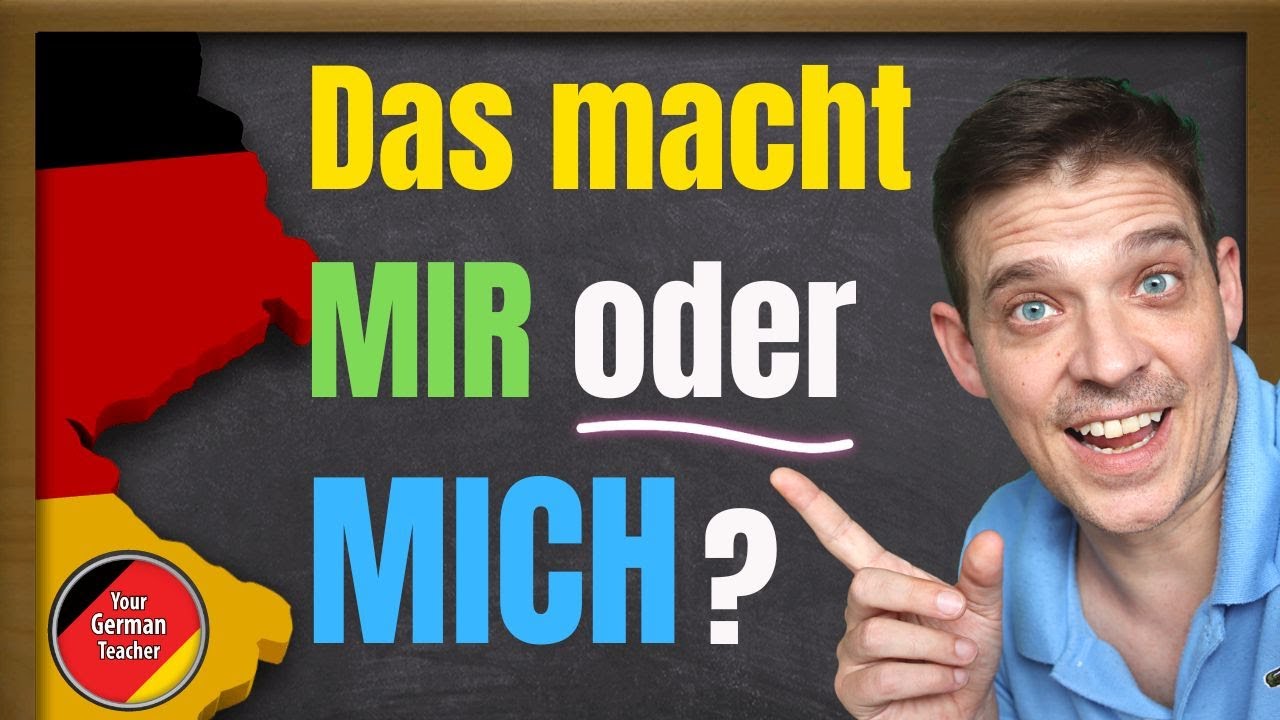
Das macht mir Spaß, but das macht mich müde: why mir in one sentence and mich in the other? The answer is simple. After the verb machen, a noun goes with mir (Dativ), and an adjective goes with mich (Akkusativ). In this lesson you learn the rule and the most common phrases with each pronoun, which...

In the Goethe A1 writing exam you have only 20 minutes, and your email can be formal or informal: the task tells you which one. Johannes shows you the two parts of SCHREIBEN, completes a registration form and writes a model email with you, and gives four tips for exam day. Everything in the exampl...
The Goethe A1 reading exam has 3 parts, 15 questions and only 25 minutes, so a clear plan matters as much as your vocabulary. Johannes goes through the whole LESEN part of Goethe-Zertifikat Start Deutsch A1 step by step: what each part looks like, how to find the right answer and why the other ans...

You do not have to understand every word in the Goethe A1 listening exam, you only have to catch the few words that answer the question. Johannes shows you what the HÖREN part of Goethe-Zertifikat Start Deutsch A1 looks like, how to prepare each task in two steps and how to find the right answer, ...
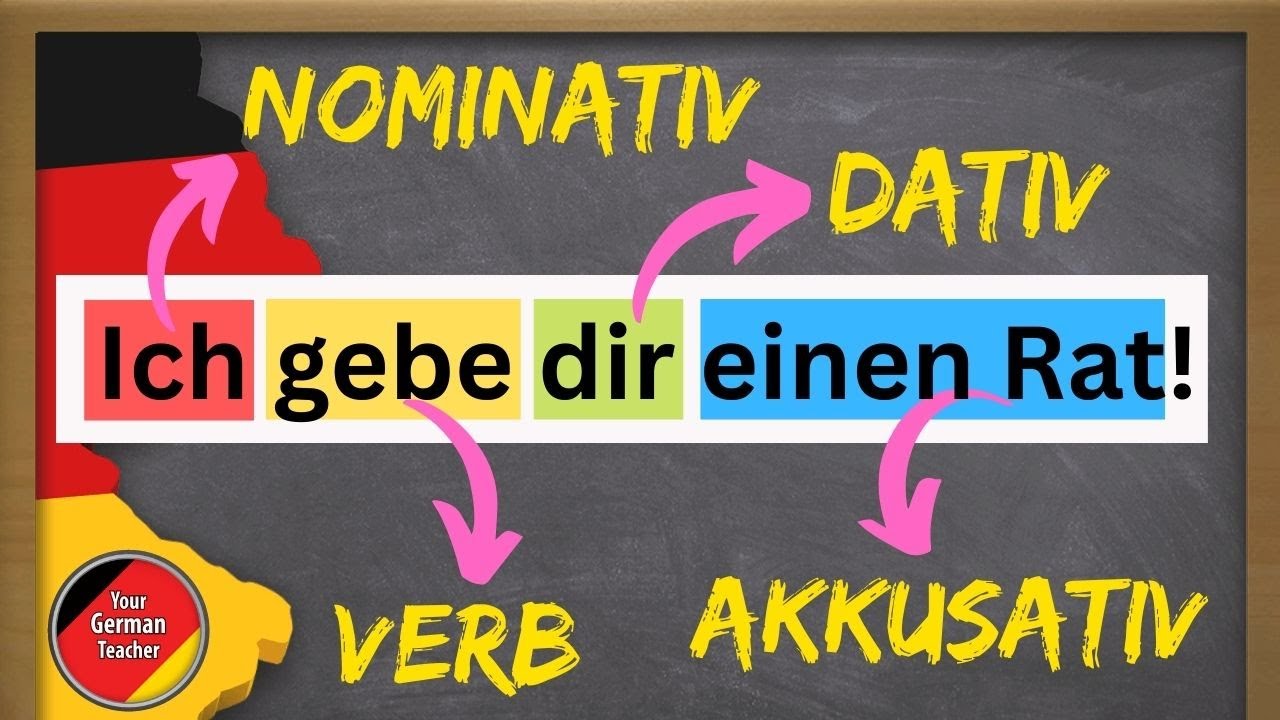
The best way to understand German cases is to take a real text apart sentence by sentence. In this lesson Luzi analyzes a diary entry he wrote, called “Ein Tag aus Luzis Leben”. For every sentence he finds the subject, the verb and the objects and explains why each one is Nominativ, Akkusativ or D...
A Nomen-Verb-Verbindung is a noun that always comes together with a certain verb, and even if you know both words, you often cannot guess the meaning. Do you say eine Rede geben or halten? What does Freundschaft schließen or in Kauf nehmen mean? Johannes shows you the top 20 combinations with a me...
German has genders, cases and prepositions, and the prepositions are the part that ties the other two together. In this lesson Luzi explains all the prepositions you need at A1 level in one video: the meaning, the case that follows and example sentences. Finally there is a bonus tip about verbs th...
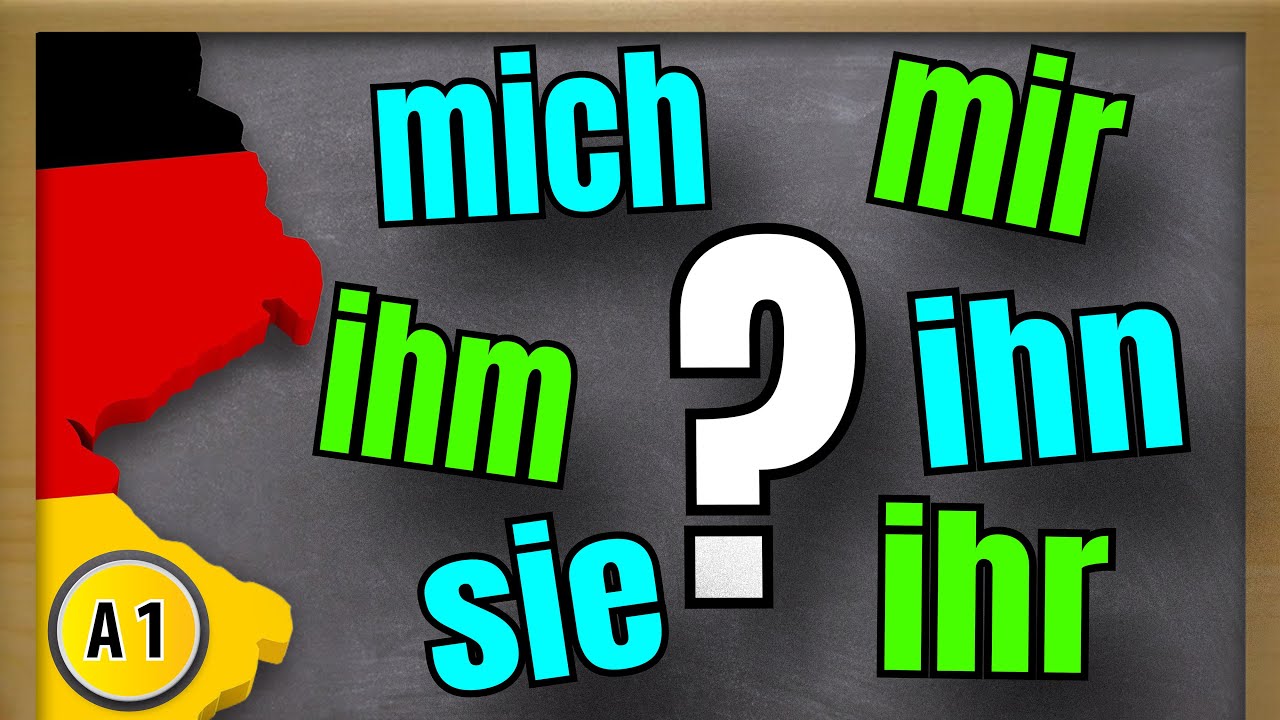
mich, mir, ihn, ihm, sie, ihr: which pronoun belongs in the gap? This practice video trains the personal pronouns in Akkusativ and Dativ at A1 level, completely in German. Below you find the 10 gap sentences with their answers, a short pronoun table, and a quick rule to decide between Akkusativ an...

Even native German speakers mix up als and wie sometimes — but the rule that decides between them is actually simple. It all comes down to one question: are the two things you're comparing equal, or not?
The Core Rule
- wie = comparing two equal things ("as ... as")
- als = comparing two unequal thin ...